
Demand charges above 30% of your bill
Demand is billed on your single highest fifteen minute interval in the month. Storage exists to flatten that spike, and solar alone cannot.
Commercial electric bills in California are dominated by demand charges, the highest 15-minute spike in a billing period. Battery storage flattens those peaks, shifts load out of the expensive hours, and keeps critical loads running when the grid goes down.
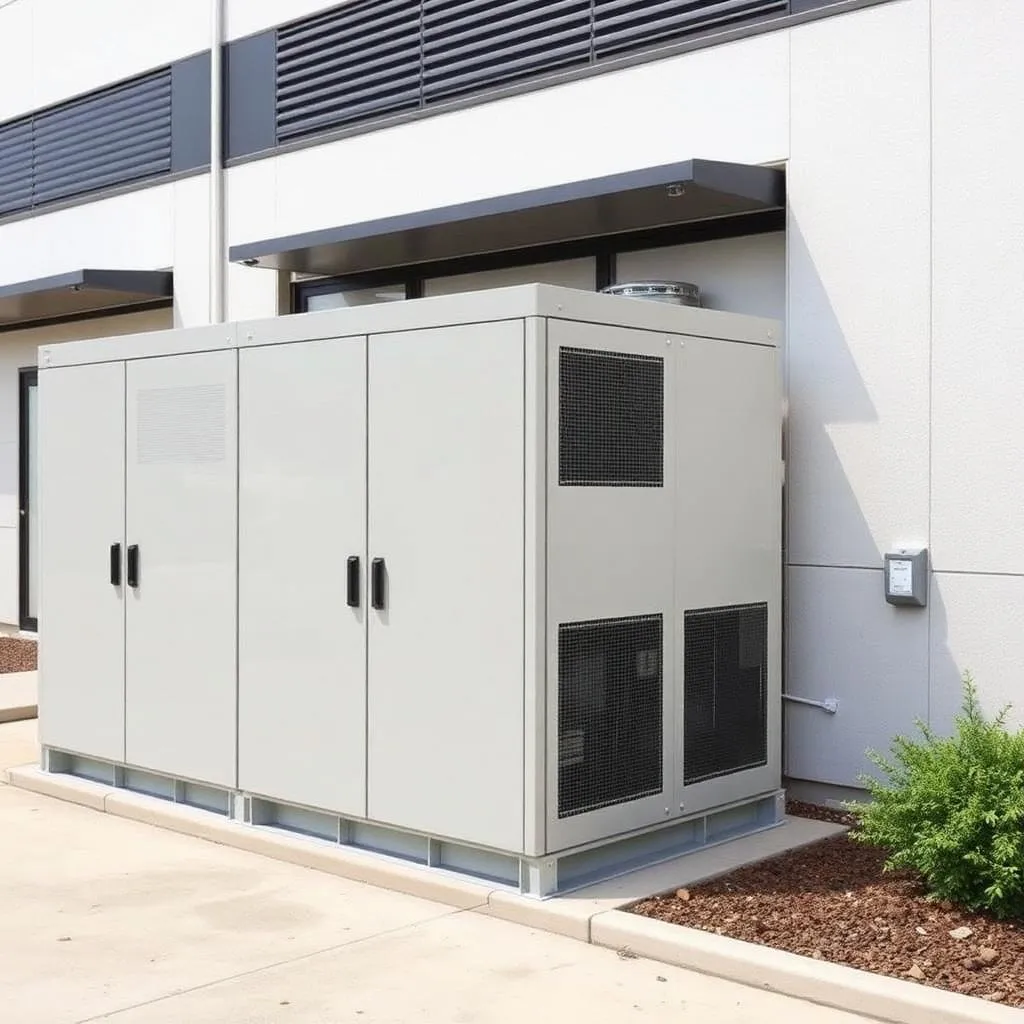
Nuon Energy sizes storage against your interval data (5, 15 or 60-minute intervals from your utility), models the demand-charge and TOU savings, and stacks the incentives that are actually open, ITC and MACRS included, into a financeable payback.
Projects are commissioned with utility-grade metering and cloud dispatch so you can prove savings month over month.
Commercial storage is a financial instrument as much as an energy asset. These are the profiles where it performs.
Demand is billed on your single highest fifteen minute interval in the month. Storage exists to flatten that spike, and solar alone cannot.
Compressors, chillers, welders, and lifts create brief peaks that set the whole month's demand charge. That is the ideal storage target.
Cold storage, data rooms, and continuous production lines can quantify downtime per hour, which makes the backup case straightforward.
Many commercial arrays cut energy charges and barely touch demand. Adding storage attacks the half of the bill solar missed.
The wider the spread between off-peak and on-peak rates, the more arbitrage value each cycle produces.
Where the utility caps export, storage lets you keep production on site instead of curtailing it.
Send a recent bill and interval data and we will model peak shaving savings against installed cost.
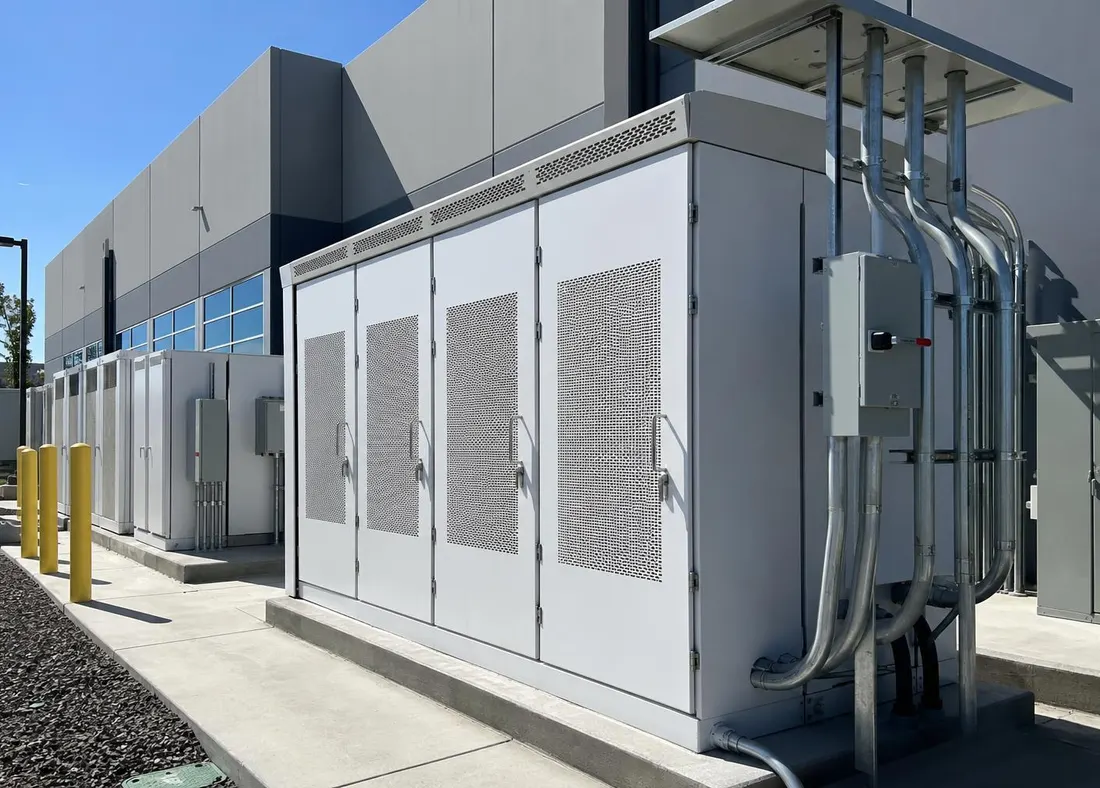
In California, commercial customers pay for both energy (kWh) and demand (kW peaks). Battery storage discharges during the highest usage windows of the month, cutting the peak the utility bills against. Layered on top, TOU arbitrage charges the battery during off-peak hours and discharges during expensive on-peak windows.
For sites with critical loads, data closets, refrigeration, medical equipment, the same battery delivers seconds-to-swap backup during PSPS events and grid failures.

We pull your 15-minute interval data from the utility, model dispatch against 12 months of load, and iterate battery kWh / kW / cycles until the economics converge. You get a savings model, not a guess.

Projects are commissioned with utility-grade revenue metering and cloud dispatch. Monthly reports compare modeled savings against actual bill reduction, so finance teams can verify performance without third-party audits.
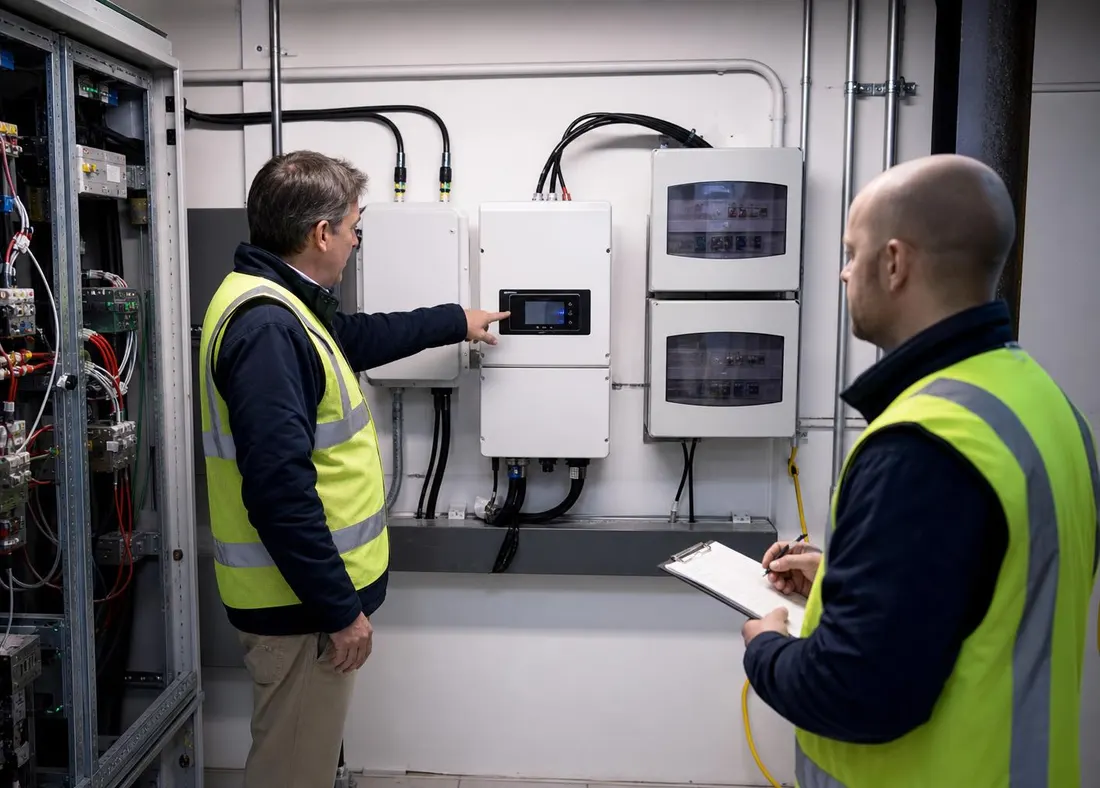
Demand charge management is usually the largest single line. The battery watches your load and discharges into the peaks that set your monthly demand billing. On a site with sharp, repeatable spikes, shift starts, compressor stacking, a big press cycling, reductions of 30 to 70 percent of the demand component are realistic.
Time-of-use arbitrage is the second. Charge on cheap off-peak energy or surplus solar, discharge during the expensive on-peak window, every day, all year. It is smaller per event than demand savings but it compounds across 300-plus cycles a year.
Resilience is the third and it is the one finance teams tend to undervalue until an outage happens. If a PSPS event or a grid fault costs you a production shift, a cold chain, or a day of clinic operations, the avoided loss dwarfs the energy savings.
The fourth is solar firming. Where you already have PV, storage lets you keep the value of midday production instead of exporting it at low compensation, and it smooths the ramp when clouds pass over the array.

SGIP was the headline California incentive for commercial storage, and it is currently unfunded, so we do not model it as a given. We build the case on the federal investment tax credit, MACRS depreciation, demand charge savings, and whichever utility or local storage programs are actually open when you sign. If SGIP reopens, we file and track it.
Federal ITC applies to standalone storage under current rules, with adders available for certain locations and content sourcing. Combined with MACRS depreciation, the after-tax cost of a project frequently lands far below the sticker price, which is exactly the number your CFO wants to see.
The model is only credible if the load data is real. We pull your 15-minute interval data from the utility, run dispatch simulation against twelve months of actual load and your actual rate schedule, then iterate kWh and kW until the economics converge. What you receive is a monthly savings projection you can hand to a lender.
After go-live, revenue-grade metering and monthly reporting compare modeled savings to actual bill reduction, so nobody has to take the projection on faith a year later.
Engineering, equipment, integration, and the controls strategy that makes the asset pay.
Not included: utility transformer work, structural site grading, and hazardous material handling, each scoped after the site study.
Next step
See this scope priced for your property
Storage projects live or die in the modeling phase. We spend more time there than anywhere else.
Week 1 to 2
Twelve months of fifteen minute data tells us exactly which intervals set your demand charges and how much energy it takes to shave them.
Week 2 to 4
Savings by category, incentive eligibility, and a payback range with the assumptions written out so your CFO can challenge them.
Week 4 to 10
Siting, spacing, ventilation, and suppression reviewed with the fire authority. This step routinely surprises people who have not done it before.
3 to 9 months
Utility study and plan check. Larger systems trigger deeper study and longer queues.
4 to 12 weeks
Pads, enclosures, switchgear, and integration. Coordinated so production is not interrupted.
2 to 8 weeks
Witness testing, dispatch programming, and a review after the first full billing cycle to confirm the model held.
Step one starts with a site survey. Most homeowners are booked within a few days.
Next step
Book my site survey
Storage is a financial instrument as much as an energy one. The tariff decides whether it works.
If demand charges are a third or more of your bill, peak shaving alone can carry the project.
Cold storage, labs, medical and data-adjacent facilities have outage costs that dwarf the system price.
Storage captures production that NEM 3.0 would otherwise credit at wholesale rates.
Batteries absorb charging spikes so your billing peak does not follow them upward.
Without a meaningful demand charge or time-of-use spread, there is little for the battery to arbitrage.
A perfectly flat load profile has no peaks to shave, which removes the main savings driver.
Battery enclosures need clearances, ventilation and fire review. Tight sites sometimes cannot accommodate them.
If you have three years left on a lease and no landlord agreement, the payback window rarely closes in time.
Still weighing it up? We will walk your site and tell you which column you fall into.
Get a free quoteSizing follows the shape of your peaks, not the size of your building.
| Configuration | Typical range | Primary use case |
|---|---|---|
| Small commercial | 30 to 100 kWh | Single peak shaving on retail and small office |
| Mid commercial | 100 to 500 kWh | Light industrial peak shaving plus partial backup |
| Large commercial | 500 kWh to 2 MWh | Manufacturing, cold storage, and multi-building campuses |
| Backup priority build | Sized to critical load | Data rooms, refrigeration, and life safety systems |
| Solar paired | Matched to array surplus | Storing midday production for evening or export-limited sites |
Not sure which row fits your roof, panel or load profile? We will spec it for you, free.
Next step
Ask an installer
Commercial storage should be evaluated on annual savings against installed cost after incentives, not on cost per kilowatt-hour.
Sets the kWh cost
Determined by how long your peaks last, not how tall they are
Sets the kW cost
Determined by how tall the peaks are. Both numbers matter independently
Substantial
Backup capable sites need transfer equipment and controls integration
Site specific
Spacing, ventilation, and suppression requirements vary by jurisdiction
Can be significant
Tier depends on customer class and location. We handle the application
Materially reduces net
Standalone storage qualifies. Confirm treatment with your tax advisor
We share the model, not just the conclusion. If your peaks are flat, storage will not pay and we will tell you before you spend money finding out.
Get your numberA well-configured commercial battery does three jobs. It shaves the demand peak that sets your monthly charge, it shifts energy out of the most expensive hours, and it keeps critical circuits alive when the grid drops.
The control strategy decides how those three priorities trade off. We tune it to your tariff and your operational risk, then revisit it as rates change rather than setting it once and walking away.
Commercial storage in California leans on the federal investment tax credit and MACRS depreciation. SGIP is unfunded at the moment, so it stays out of the model unless it reopens. Eligibility depends on utility territory and project type, and we confirm all of it, tax treatment included with your advisor, before it enters your numbers.
Every system is installed to current fire code with the required clearances, detection and signage, and coordinated with the local fire authority during plan review so approval is not a surprise at the end.
Next step
Get these answers for your own home
Any vendor can promise demand savings. The test is whether the first twelve bills after commissioning match the model.
Two identical warehouses can need completely different systems. Only the interval data reveals which one you are.
Battery siting is a fire code conversation. We open it in week four rather than discovering a spacing problem at plan check.
Dispatch settings get revisited once real invoices arrive. Load profiles shift, and a system nobody tunes drifts away from its model.
Next step
Get a free quote
Still have a question we did not answer? Ask us directly, we will give you a straight answer and a written number.
Storage performs best as part of a coordinated site energy strategy.