
Summer bills over $200
Once your average monthly bill crosses roughly two hundred dollars, the arithmetic starts working in almost every roof orientation we survey.
Under NEM 3.0, generic cookie-cutter solar loses money. Every Nuon Energy system is designed against your actual 12-month utility usage, your roof's shade profile, and your future plans, EVs, heat pumps, pool pumps, ADUs. In Vista (92081), Nuon crews design every install around NEM 3.0 rates, 270 usable sun days a year, and the specific roof and load profiles we see across Shadowridge, Vista Village, Hills of Twin Oaks, Buena Creek.
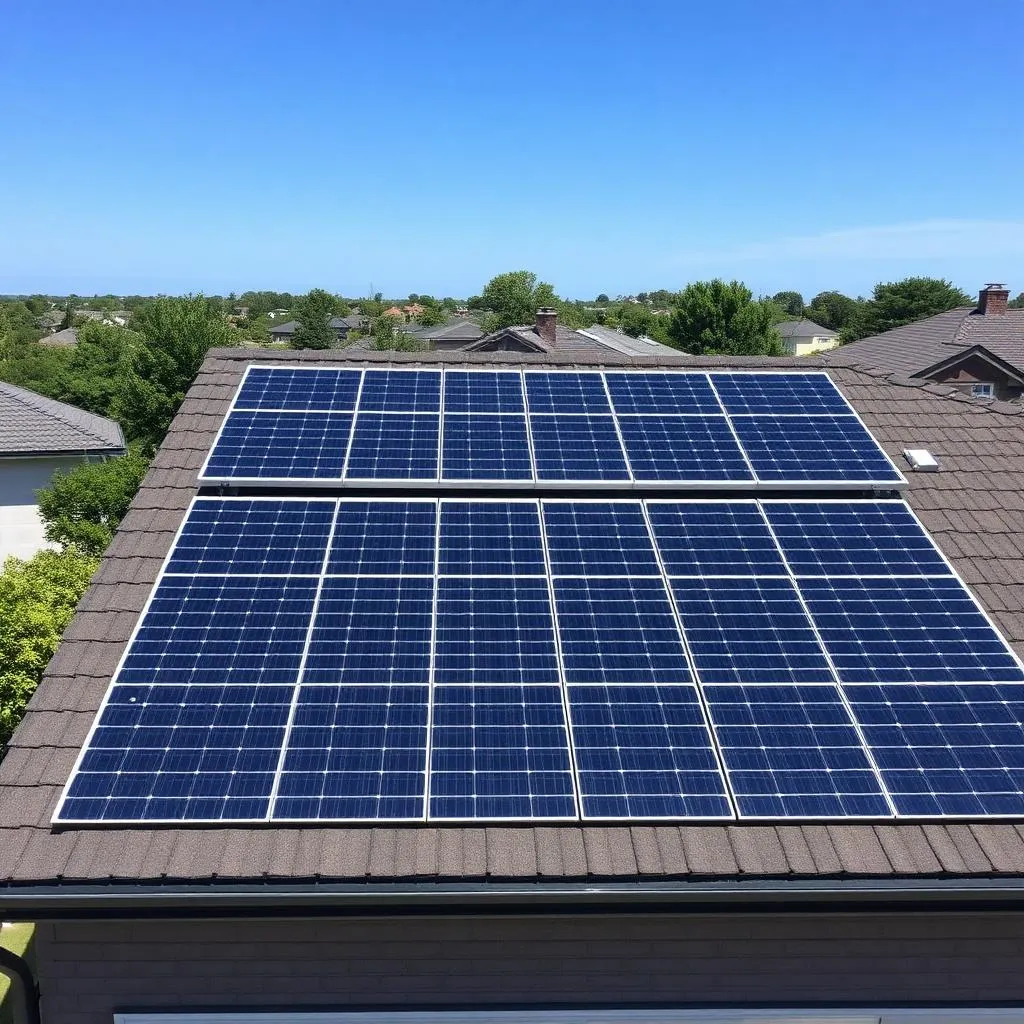
Nuon Energy installs solar panels across Vista and the surrounding north county Southern California area. Our regional crews keep the same in-house team on your project from design through PTO, no subcontracted labor and no handoffs.
We install Tier 1 modules, many of them US-made, with Enphase IQ8 microinverters, so each panel produces independently and shading on one module doesn't drag down your whole array. Every roof penetration is flashed and sealed to the manufacturer's spec.
You get a full production estimate, a shade report from your specific roof, and a plain-English breakdown of financing options, cash, HELOC, or 25-year solar loan, before you sign anything.
Local context: Shadowridge and Hills of Twin Oaks HOAs care about aesthetics, all-black panels, hidden conduit, and matching junction boxes are standard on our Vista designs.
Permits & incentives in Vista: City of Vista permits residential solar in about 2 weeks; battery add-ons and MSP upgrades stay on the same permit. The federal clean energy tax credit, the San Diego Community Power battery rebate for storage, and Vista's CivicSpark climate program provides free electrification consultations for interested homeowners.
Solar is a twenty five year decision made from a one month bill. These are the honest triggers we see in Southern California.
Once your average monthly bill crosses roughly two hundred dollars, the arithmetic starts working in almost every roof orientation we survey.
Payback in Southern California typically lands between six and nine years with storage. Under five years of ownership the case gets thin and we will say so.
Panels outlive most roofs. A newer roof, or a re-roof done at the same time, avoids paying to remove and reset the array later.
Charging at home adds three to five thousand kilowatt-hours a year. Producing those yourself is far cheaper than buying them at TOU rates.
utility rates have climbed steadily for a decade. A fixed system cost is a hedge against a variable you do not control.
One tree over the south face is often the only thing between a mediocre design and a good one. We map it before quoting, not after.
We will run a shade model and a production estimate on your exact address, at no cost.
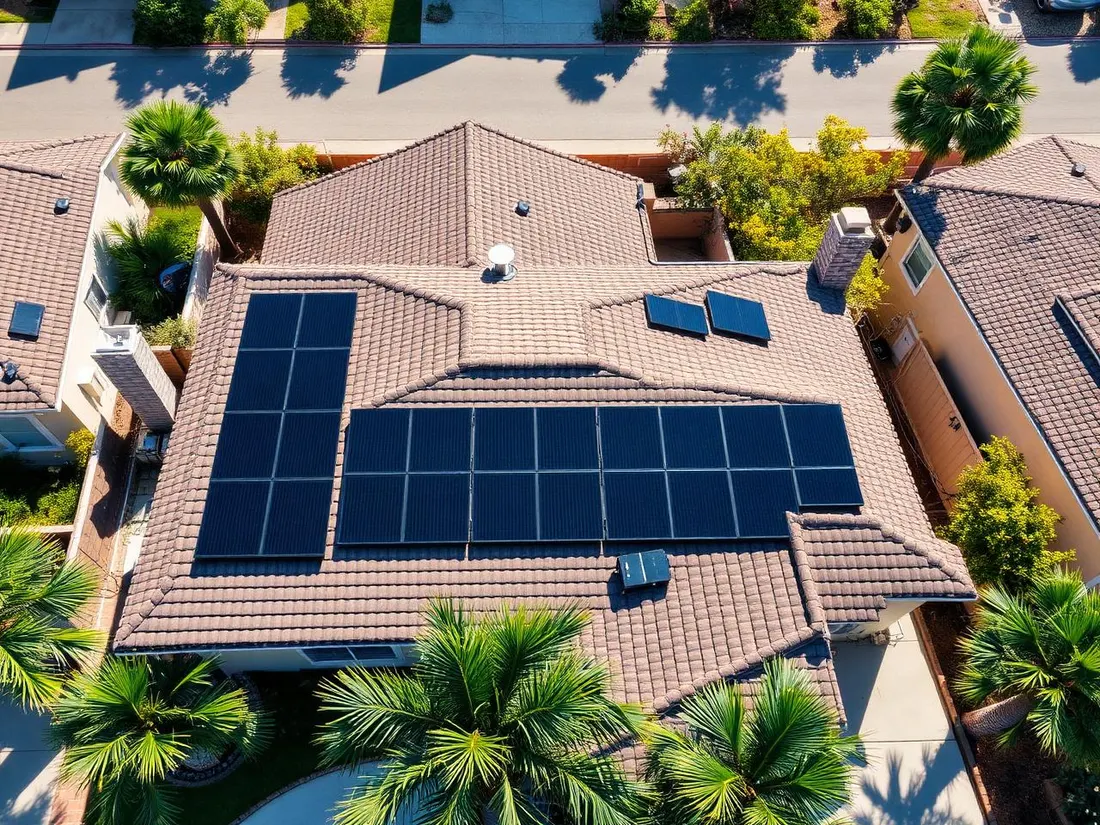
Solar installation in Southern California paired with Tesla storage lets homeowners maximize savings and protect against outages. With abundant sunshine and rising utility rates, battery systems like the Tesla Powerwall store excess production for evening use, peak-rate periods, and grid outages, making solar more efficient, reliable, and cost-effective year-round.
A battery is what turns solar from a daytime credit into power you actually use at night. It charges off your own panels while the sun is up, then feeds the house after 4 PM when utility rates jump. When the grid drops, it keeps the lights, fridge and Wi-Fi running without you touching anything.
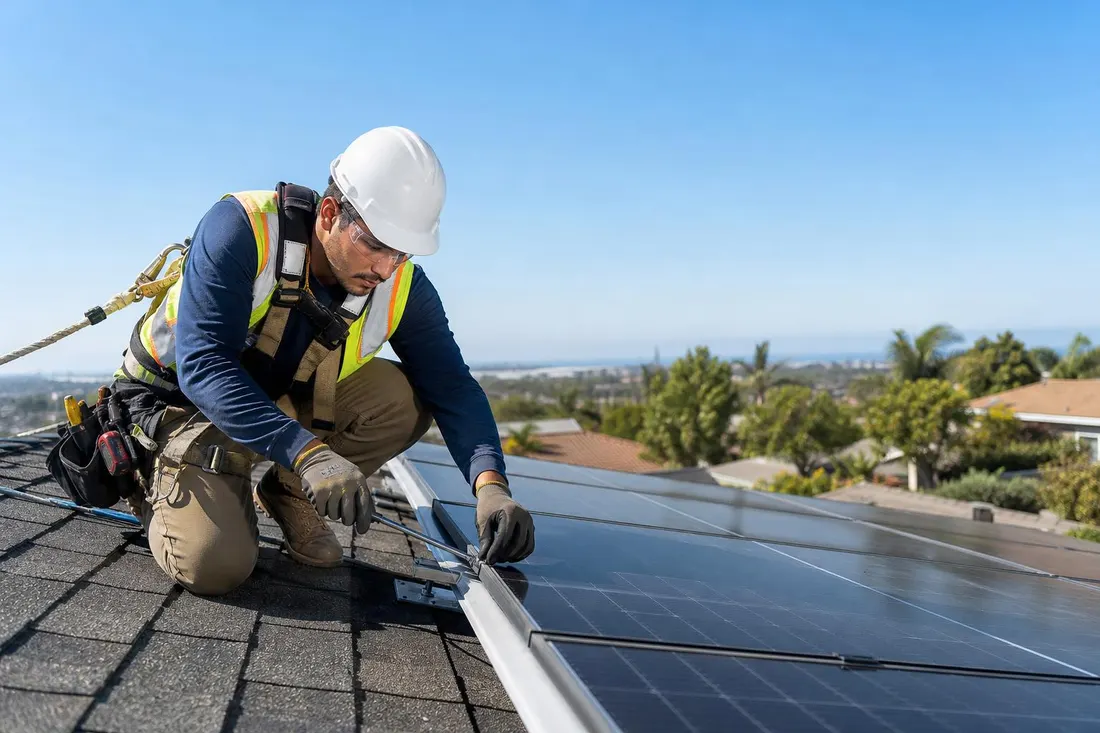
Nuon Energy stands out as one of the best solar installers in Southern California by combining local expertise, high-quality equipment, and a customer-first approach. We build custom-designed systems for the local climate, rising utility costs, and long-term savings, backed by professional installation, transparent pricing, and reliable ongoing support.
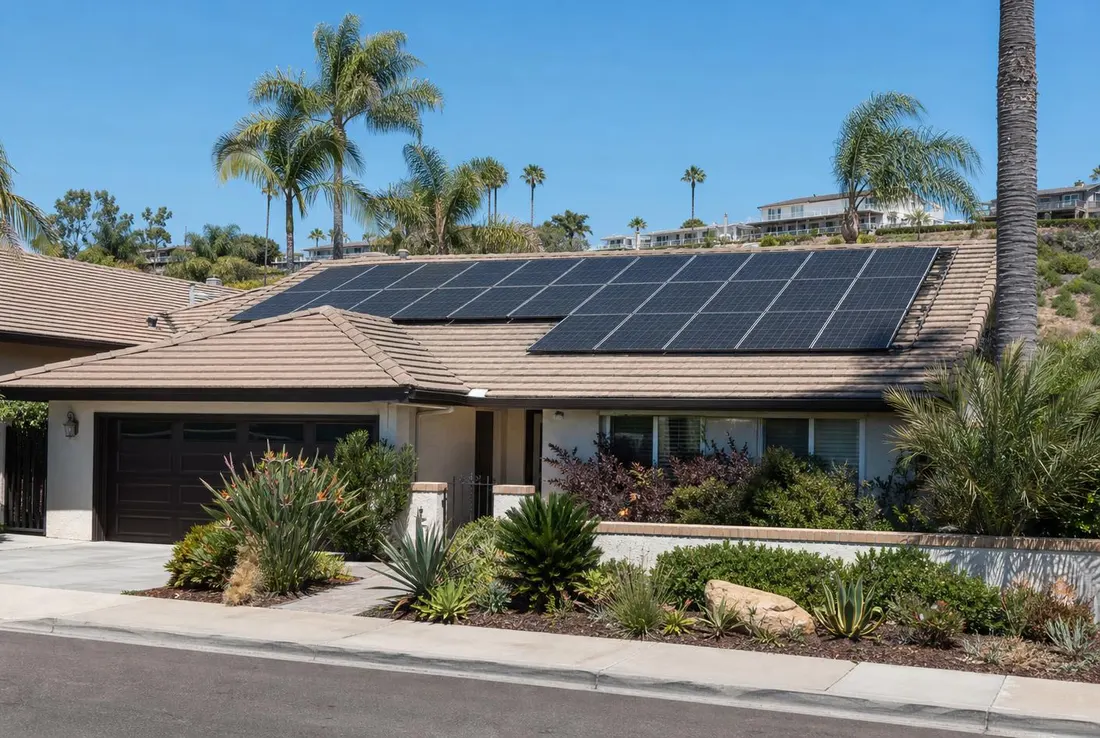
Design starts with your last twelve months of utility usage, not an average. We want the shape of the year, the August spike, the shoulder months, the overnight baseline, because that shape determines how much production you can actually use rather than export at a low credit.
Then we look at the roof itself. Azimuth and pitch set the production curve. A due-south array peaks at noon. A west-facing array produces less overall but produces later, which under time-of-use pricing is often worth more per kilowatt-hour. On many Southern California homes the right answer is to weight the array west even though a simulator will tell you south makes more power.
Shade gets modeled per module, not per roof. That eucalyptus on the neighbor's line will clip your afternoon in winter and not in June. Microinverters let each module produce independently, so a shaded corner costs you that corner rather than the whole string.
Coastal marine layer is the last piece. May and June mornings burn off late along the coast and inland sites like El Cajon and Santee stay clear. We use local irradiance data rather than a countywide number, which is why our production estimates tend to be lower and more accurate than what a door-knocker quotes.

We install Tier 1 modules, many of them US-made, from manufacturers likely to still be around in year twenty when a claim matters. The modules carry a manufacturer-backed 25-year performance warranty, roughly 92% of rated output at year 25, and that warranty sits with the manufacturer, not with us. Panel warranty paperwork is worth exactly as much as the company behind it.
On the inverter side we default to Enphase IQ8 microinverters. Each module gets its own inverter, so there is no single point of failure taking down the array, shade on one panel does not drag its neighbors, and you get per-module monitoring that tells you which unit is off before you notice a production dip.
Racking is flashed-mount, not sealant-only. Every penetration gets a metal flashing under the course above it, the same detail a roofer would use for a vent. Sealant is a backup, never the primary waterproofing. This is the single most common shortcut in residential solar and the reason so many arrays leak in year four.
Rapid shutdown, conduit runs, and labeling all get built to current code because the inspector will check and because a future electrician should be able to read your system without a treasure hunt.
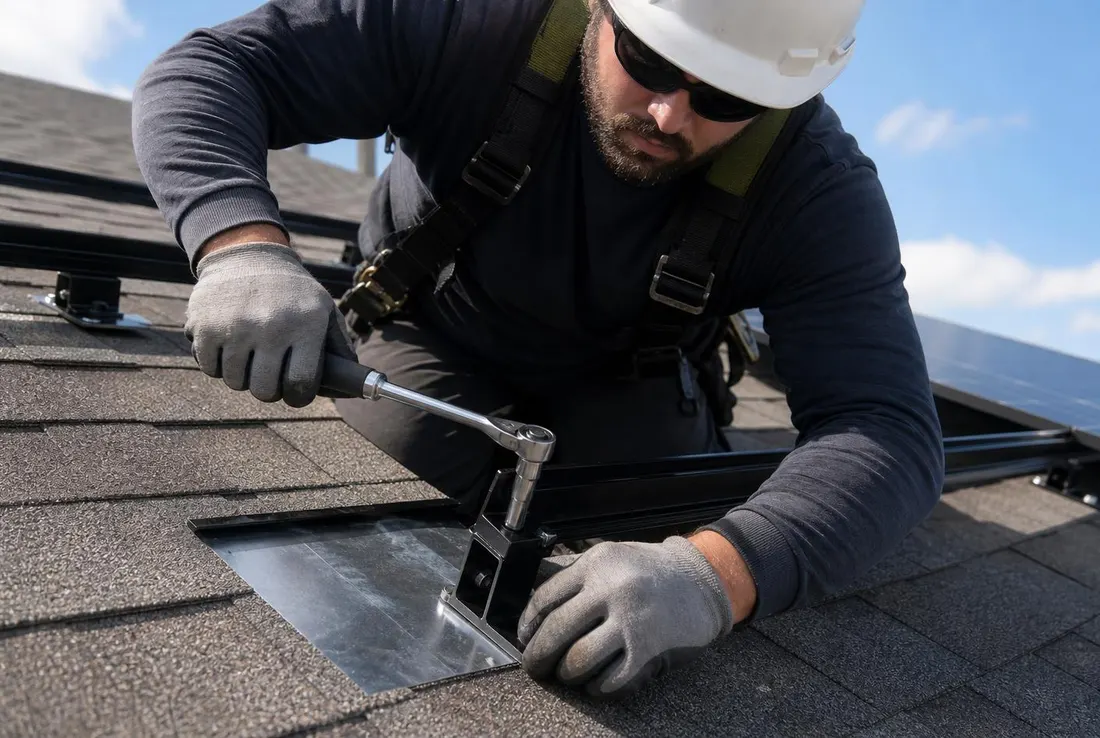
The install is the short part. Panels go up in one to three days on a typical home. Everything around it is process, and being honest about that timeline is one of the easier ways to keep a customer happy.
Week one to two is site survey and engineering, including the structural check and the single-line diagram. Week two to five is city permitting, which varies a lot by jurisdiction. The City of San Diego moves reasonably fast on solar. Some smaller jurisdictions and any HOA review add time.
After install comes inspection, then the utility interconnection application and permission to operate. permission to operate from your utility commonly runs two to six weeks after the city signs off. Your system stays off until PTO arrives, which is not a Nuon delay, but we will chase it and keep you posted rather than going quiet.
Total, from signed contract to a system legally producing, six to ten weeks is normal. We give you a written schedule at contract and update it when anything moves.
One written scope covering design, hardware, permitting, install, and interconnection.
Not included: tree removal, electrical service upgrades where required, and roof repairs, all identified during survey and quoted separately.
Next step
See this scope priced for your property
Install day is the short part. Between signing and switching on, most Southern California projects run six to twelve weeks, and the utility owns most of that.
Week 1
We model production against your interval data and produce a layout with a real annual kilowatt-hour figure, not a percentage offset with no math behind it.
Week 1 to 2
Roof condition, rafter spacing, attic access, main panel, and shade obstructions measured in person.
Week 2 to 6
Plan set to the city or county. Timelines vary a lot between jurisdictions and we will tell you which one you are in.
1 to 3 days
Mounting, modules, conduit, inverter, and rapid shutdown. Power is interrupted briefly during the panel tie-in.
Week 7 to 9
Inspector checks the array, labeling, and electrical work. We meet them on site.
Week 8 to 12
Your utility swaps or reprograms the meter and grants PTO. Only then can the system legally export.
Step one starts with a site survey. Most homeowners are booked within a few days.
Next step
Book my site survey
Solar is a strong investment here, and it is also a twenty-five year decision. Both things are true.
Southern California averages roughly 260 usable production days a year, which is about as good as it gets in the continental US.
Utility increases have outpaced inflation for years. Locking in your own generation is a hedge against the next decade of them.
It still applies to systems placed in service under current rules, and it comes off the total cost, storage included.
Owned systems consistently appraise into the home value, unlike a lease that a buyer has to assume.
Export credits dropped sharply. A solar-only system still saves money, but pairing with storage is what protects the return.
Mature trees and neighboring two-story builds cut production. We shade-model before quoting so nobody is surprised in December.
Panels last twenty-five years. If the roof under them has eight left, you will pay to remove and reset the array.
Six to ten weeks from signature to permission to operate is normal here. Anyone promising two weeks is skipping something.
Still weighing it up? We will walk your site and tell you which column you fall into.
Get a free quoteRough guide only. Your actual design comes from your usage data and your roof, not from a table.
| System size | Typical annual production | Fits a household that |
|---|---|---|
| 4 kW | About 6,400 kWh | Two people, no EV, gas heat and gas water heating |
| 6 kW | About 9,600 kWh | Family of three to four, moderate air conditioning use |
| 8 kW | About 12,800 kWh | Family of four to five with one EV charging at home |
| 10 kW | About 16,000 kWh | Larger home, pool pump, two EVs, or all-electric appliances |
| 12 kW plus | 19,000 kWh and up | All-electric home with heat pump HVAC and multiple EVs |
Not sure which row fits your roof, panel or load profile? We will spec it for you, free.
Next step
Ask an installer
Cost per watt is the only fair way to compare two solar quotes. Here is what moves it on your specific house.
Larger is cheaper per watt
Fixed costs like permitting and mobilization spread across more panels
Tile adds 10% to 20%
Tile requires piece by piece removal and reset around every mount
Moderate
Four small arrays cost more to install than one continuous field
$0 to $5,500
Older services often need a busbar upgrade before interconnection
Small premium
Worth it on shaded or multi-plane roofs, unnecessary on a clean south face
Reduces net cost
Applies to equipment and labor. Confirm eligibility with your tax preparer
Ask any installer for cost per watt and the production estimate in kilowatt-hours. Those two numbers make quotes comparable. Monthly payment figures do not.
Get your numberResidential systems in our service area typically run $18,000 to $35,000 before incentives, depending on size, equipment and roof complexity. Add storage and that range moves up, though the federal credit applies to both.
The number that matters more than the sticker price is your blended cost per kilowatt hour over the life of the system. We show that figure next to your current utility rate and its published escalation history, so the comparison is apples to apples.
We install tier-one modules from manufacturers with real balance sheets behind their warranties, paired with Enphase microinverters. Microinverters keep one shaded module from dragging down a whole string, and they make future service far simpler.
Every roof penetration is flashed to the manufacturer specification, and every array is commissioned with monitoring so you can see production per panel from your phone. If a module underperforms, we know before you do.
Next step
Get these answers for your own home
Most quotes are generated from a satellite image in under ten minutes. That is fine for a ballpark and useless for a commitment.
We give you an annual kilowatt-hour number you can hold us to, and the assumptions behind it, instead of a vague offset claim.
Under the current tariff, self consumption beats export. That changes optimal array orientation and it changes whether you should add storage now or later.
If your roof will not outlive the array, we say so before you sign. Removing and resetting panels in year eight costs thousands.
Next step
Get a free quote
Still have a question we did not answer? Ask us directly, we will give you a straight answer and a written number.
Solar alone leaves value on the table under current California rates.