
Employees asking about charging
Workplace charging is now a retention and recruitment item. It is also the easiest charging case to justify because dwell times are long.
California's fleet and workplace charging mandates are accelerating. Nuon Energy designs and installs Level 2 workplace charging and DC fast charging for fleets, multifamily properties and retail sites, with or without solar and storage tied in. In Valley Center (92082), Nuon crews design every install around NEM 3.0 rates, 277 usable sun days a year, and the specific roof and load profiles we see across Woods Valley, Cole Grade, Hell Hole Canyon.
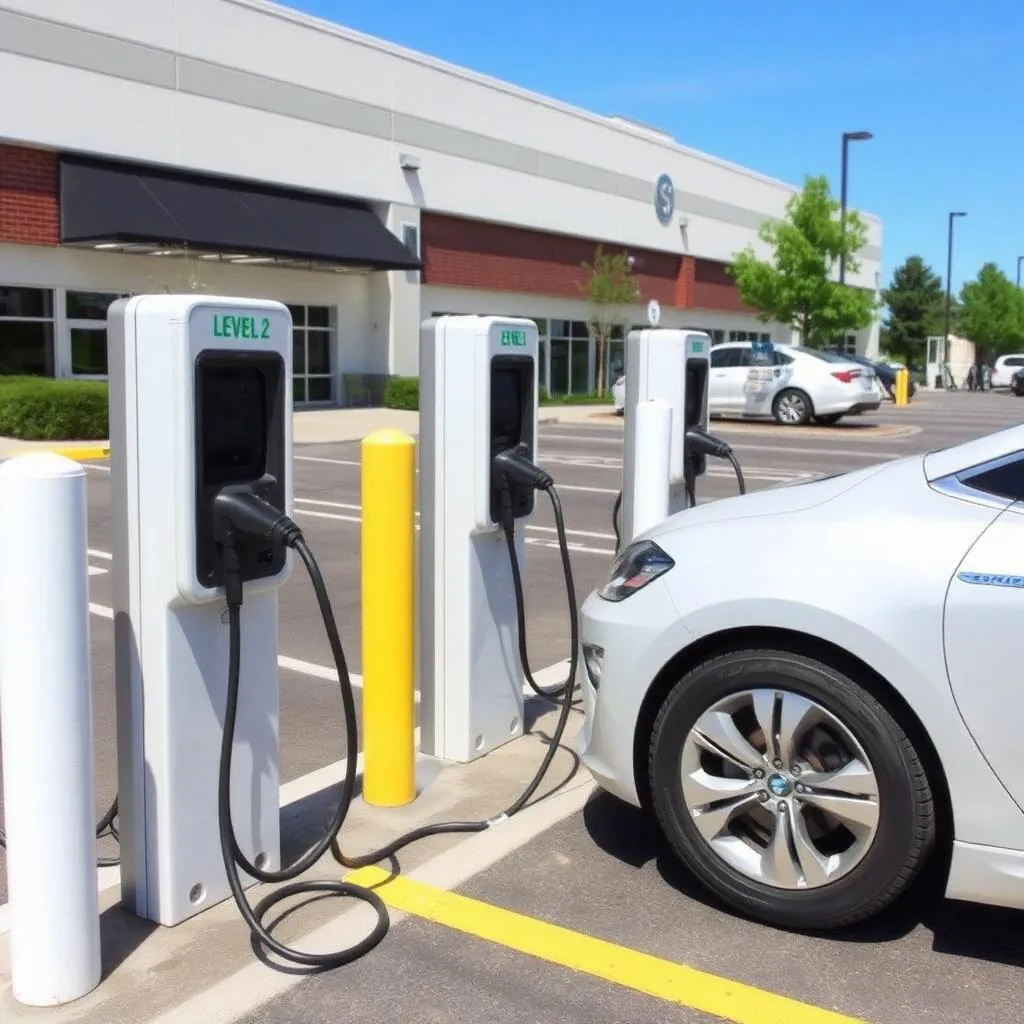
Nuon Energy installs ev charging across Valley Center and the surrounding north county Southern California area. Our regional crews keep the same in-house team on your project from design through PTO, no subcontracted labor and no handoffs.
We work with ChargePoint, EVgo-compatible hardware, Wallbox and Tesla equipment, and handle the full electrical scope: service upgrades, sub-metering, load management, and network configuration for billing and access control.
Where utility incentives apply, including programs from SCE, SDG&E, LADWP, PG&E or Riverside-area utilities, we manage the incentive application end-to-end so you capture every dollar available.
Local context: Ag loads run on their own schedule, and the grid out here is exposed. Larger arrays with storage, and sometimes a separate ag meter design, are what make the numbers work.
Permits & incentives in Valley Center: San Diego County unincorporated permitting, two to three weeks for roof mounts and longer for ground mounts. The federal clean energy tax credit applies to solar and storage, and the San Diego Community Power battery rebate is the funded storage incentive right now since SGIP is out of money. Agricultural properties may also qualify for USDA REAP grants on larger systems.
Charging projects succeed or fail on electrical capacity, not on the chargers themselves. These are the triggers we see.
Workplace charging is now a retention and recruitment item. It is also the easiest charging case to justify because dwell times are long.
Fleet depots need capacity planning years ahead of vehicle delivery. Utility upgrades take longer than vehicle procurement does.
Retail, dining, and hospitality sites can convert charging into foot traffic and time on site rather than treating it as a cost.
CALGreen already requires EV capable spaces in many project types. Doing more than the minimum now is far cheaper than retrofitting.
Poorly specified early installations are often on undersized circuits with no load management. That is fixable without replacing everything.
Utility make-ready programs and state incentives can cover a substantial share of infrastructure cost for qualifying sites.
We will assess service capacity, model demand impact, and identify the rebates you still qualify for.
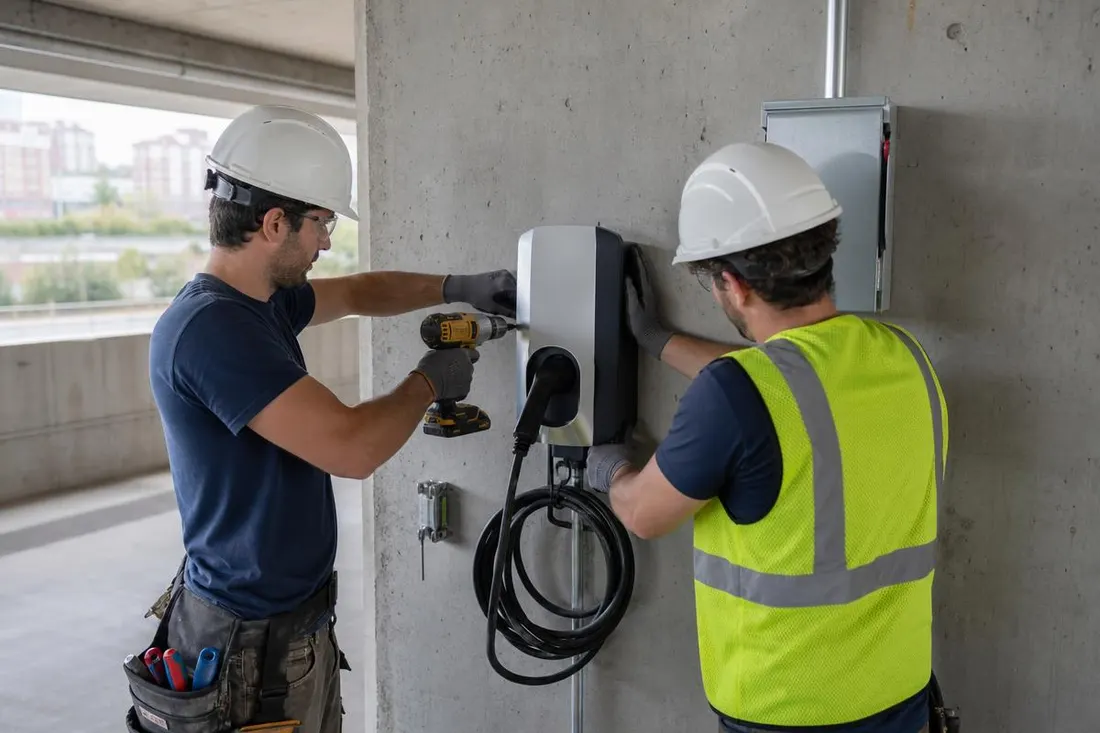
We install options for home, commercial, and smart charging that match different budgets, power needs, and site constraints. Each project covers permitting, equipment selection, and safe electrical work to get chargers running reliably from day one.
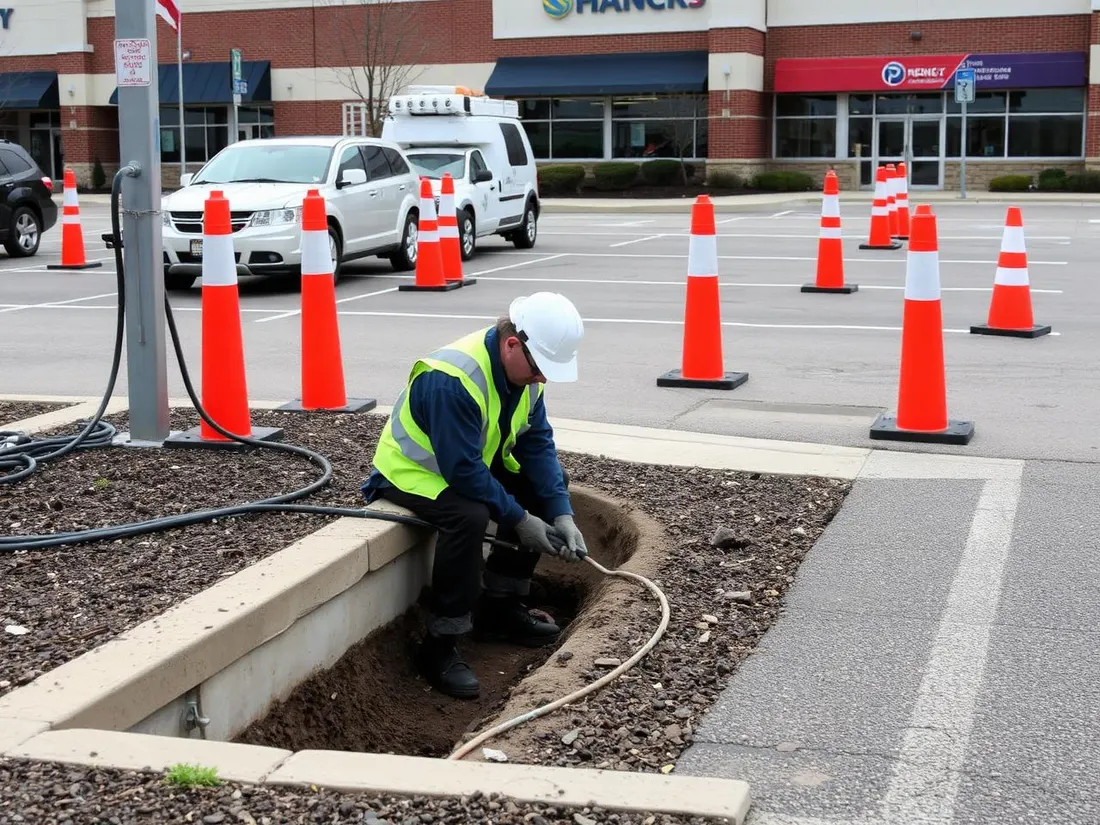
You can add Level 2 or DC fast chargers at workplaces, apartments, or retail lots to serve employees, residents, or customers. Commercial installs include site planning for traffic flow, ADA access, and conduit runs to multiple stalls.
We handle utility coordination, permits, and the layout drawing. Every project ships with an expected charging power per stall and a documented utilization plan before you sign.
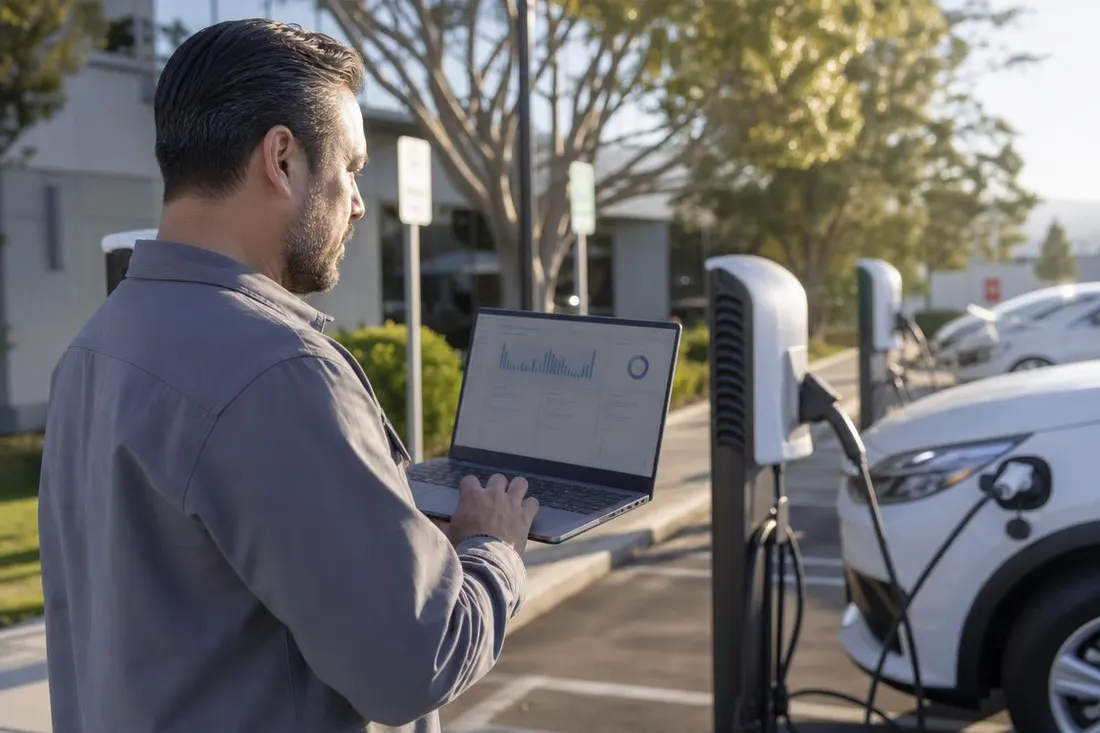
Smart chargers let you schedule sessions, track energy, and reduce demand charges through load balancing. We standardize on open-protocol (OCPP) hardware so you keep flexibility on management software and future vendor changes.

You may be able to combine federal credits with California and Southern California utility programs to significantly cut up-front cost. Programs like CALeVIP, Charge Ready-style make-ready programs, and local utility incentives can cover make-ready costs, equipment, and installation for qualifying sites.
We manage the incentive application end-to-end, application, documentation, and reservation, so you don't leave dollars on the table.
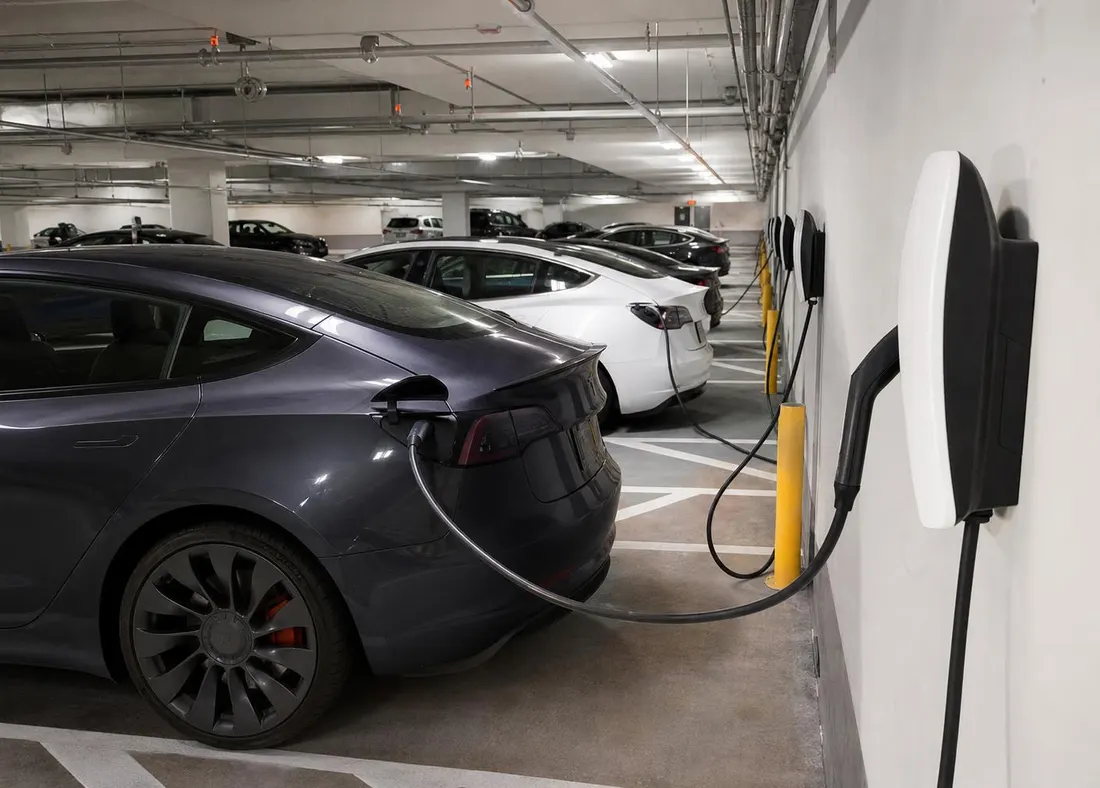
The most expensive mistake in EV charging is buying power you do not need. A workplace site where cars sit for eight hours does not need 19 kW per port. At 7 kW a car parked from nine to five picks up well over 200 miles, which is far more than a commuter uses. Halving the per-port power often doubles the number of stalls you can serve on the same electrical service.
Fleet depots are the opposite problem. Vehicles return in a cluster and have to be ready by a fixed hour, so the math is total energy divided by the dwell window, and that frequently pushes you toward DC or high-power Level 2 with managed sequencing.
Multifamily is its own category, because dwell time is long, utilization is unpredictable, and billing has to be fair per resident. Load-managed Level 2 with per-user metering is almost always the right answer there.
We start from vehicle counts, dwell times, and daily miles, then work backwards to hardware. That order matters. Picking the charger first and hoping the service supports it is how projects end up needing a transformer nobody budgeted for.
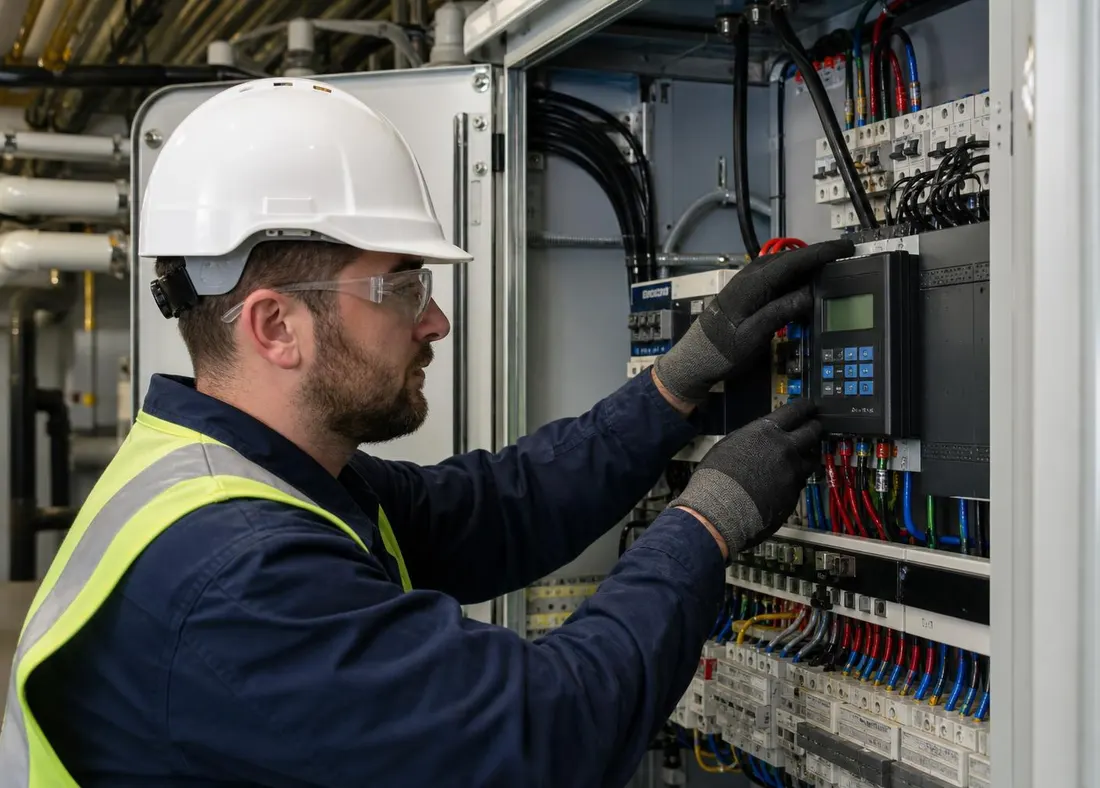
Commercial customers pay for demand, the single highest sustained draw in the billing period, and EV charging is exceptionally good at creating a new peak. Six Level 2 ports all pulling at once can add over 60 kW to a site that never previously spiked above 90. That new peak sets the demand charge for the entire month even if it happened once for fifteen minutes.
Load management fixes most of this cheaply. Dynamic allocation shares a fixed power budget across active ports, so ten cars charge a bit slower rather than the site tripping a new demand tier. Nobody in a workplace lot notices, and the bill impact disappears.
Time-of-use scheduling handles the rest, pushing charging into off-peak windows overnight where the energy rate is a fraction of the afternoon price. For fleets that return in the evening, this is often free money.
Where DC fast charging is involved and the peaks are unavoidable, battery storage buffers the spike. The battery absorbs the burst and recharges gently, which can also let you avoid a service upgrade entirely. That avoided upgrade is frequently larger than the cost of the storage.
Capacity study through activation, including the software nobody thinks about until later.
Not included: utility transformer upgrades, which are billed by the utility, and any lot resurfacing beyond trench restoration.
Next step
See this scope priced for your property
The chargers are a two day install. Utility capacity is what decides whether the project takes three months or eighteen.
Week 1 to 2
We measure the existing service, read your demand profile, and determine how many chargers the site can support today without an upgrade.
Week 2 to 4
Power levels, stall placement, cable management, and ADA compliance mapped against how drivers actually use the lot.
1 to 12 months
Make-ready applications and any service upgrade request. This is the long pole and we start it first.
4 to 10 weeks
Electrical and, where trenching is involved, encroachment or civil permits.
1 to 4 weeks
Trenching, conduit, panel work, charger mounting, and restoration of the lot surface.
1 to 2 weeks
Commissioning, payment configuration, load management tuning, and driver onboarding.
Step one starts with a site survey. Most homeowners are booked within a few days.
Next step
Book my site survey
EV charging is straightforward to install and easy to get wrong on the economics. Here is the balance.
Charging has moved from perk to expectation in office, multifamily and retail leasing conversations.
California and utility programs continue to offset a meaningful share of infrastructure cost, especially make-ready work.
Daytime charging fed by your own array turns a new load into a use for production you would otherwise export cheaply.
For retail and hospitality, chargers reliably extend how long people stay on site.
Fast chargers can spike demand and quietly reset your billing peak. Storage or load management usually needs to be part of the design.
Many buildings need a service upgrade before adding meaningful charging. That has to be scoped first, not discovered mid-project.
Ports sitting idle are dead capital. We size for today and trench conduit for tomorrow.
Software and network subscriptions are ongoing costs. We show them in the model instead of leaving them off.
Still weighing it up? We will walk your site and tell you which column you fall into.
Get a free quoteMatch power level to dwell time. Overpowering a workplace lot wastes capital and creates demand charges you did not need.
| Level | Typical power | Right for |
|---|---|---|
| Level 2, 7.2 kW | About 25 miles of range per hour | Workplace and multifamily where cars sit all day |
| Level 2, 11.5 kW | About 40 miles per hour | Retail and hospitality with two to four hour dwell |
| Level 2, 19.2 kW | About 60 miles per hour | Fleet depots with tight overnight turnaround |
| DC fast, 60 kW | About 200 miles per hour | Convenience retail and short-stop corridors |
| DC fast, 150 kW plus | Highway speed charging | Public corridor sites and heavy fleet applications |
Not sure which row fits your roof, panel or load profile? We will spec it for you, free.
Next step
Ask an installer
On most projects the hardware is under a third of the total. Infrastructure is the rest.
Often the largest line
Cost per linear foot rises sharply through concrete and across drive aisles
Zero to very large
If the existing service can carry the load, you skip the most expensive category entirely
L2 vs DC fast
DC fast hardware and its switchgear cost many times a Level 2 installation
Small cost, large saving
Software throttling often avoids a service upgrade and cuts demand charges
Ongoing subscription
Per port, per month. Worth comparing across platforms before committing
Can cover a large share
Utility programs frequently pay for the infrastructure to the stall
Always trench for more ports than you install. The second trench costs nearly as much as the first and disrupts the lot twice.
Get your numberLevel 2 charging fits anywhere people park for more than an hour, which covers offices, apartments, hotels and most retail. It is cheaper per port and far easier on your electrical service.
DC fast charging makes sense along corridors, at fleet depots and at high-turnover retail. It costs more, needs more power and almost always benefits from storage sitting behind it.
Most of the cost in a charging project is the make-ready work: trenching, conduit, switchgear and panel capacity. That is also what most rebate programs target, which is why sequencing the application before construction matters.
We handle hardware selection, network setup, commissioning and ongoing service, and we design the underground so adding ports in year three does not mean cutting your parking lot open again.
Next step
Get these answers for your own home
Plenty of installers will sell you six chargers and discover the service cannot carry them. We run the capacity study before quoting hardware.
Uncontrolled charging can add a demand peak that costs more than the electricity. Load management is standard on our installs, not an upsell.
We size conduit and panel space for the port count you expect in five years, not just the count you are funding today.
Where a carport or rooftop array exists, we integrate charging with generation and storage so peaks are absorbed on site.
Next step
Get a free quote
We deliver Level 2 for workplace and multifamily, and DC fast charging for fleet and public sites. Every install includes load management and open-protocol networking.
Workplace + multifamily
Ideal for workplaces, apartments and destination sites where vehicles sit 4+ hours
Fleet + retail
Ideal for fleet depots, retail centers and highway corridors needing sub-30-min charging
Peak-shaved charging
Ideal for sites with high demand charges or limited utility service capacity
Still have a question we did not answer? Ask us directly, we will give you a straight answer and a written number.
Charging load is easiest to justify when it is fed by your own generation.