
Ponding water 48 hours after rain
Standing water means drainage has failed or the deck has deflected. Both accelerate membrane breakdown and add dead load the structure was not designed for.
Nuon Energy replaces and re-covers commercial roofs before solar goes on, so your PV asset lives its full 25-year life on a substrate that lasts as long. We install TPO, PVC and modified-bitumen systems from Carlisle, GAF and Johns Manville. In La Jolla (92037), Nuon crews design every install around NEM 3.0 rates, 263 usable sun days a year, and the specific roof and load profiles we see across Bird Rock, La Jolla Shores, Muirlands, Village.
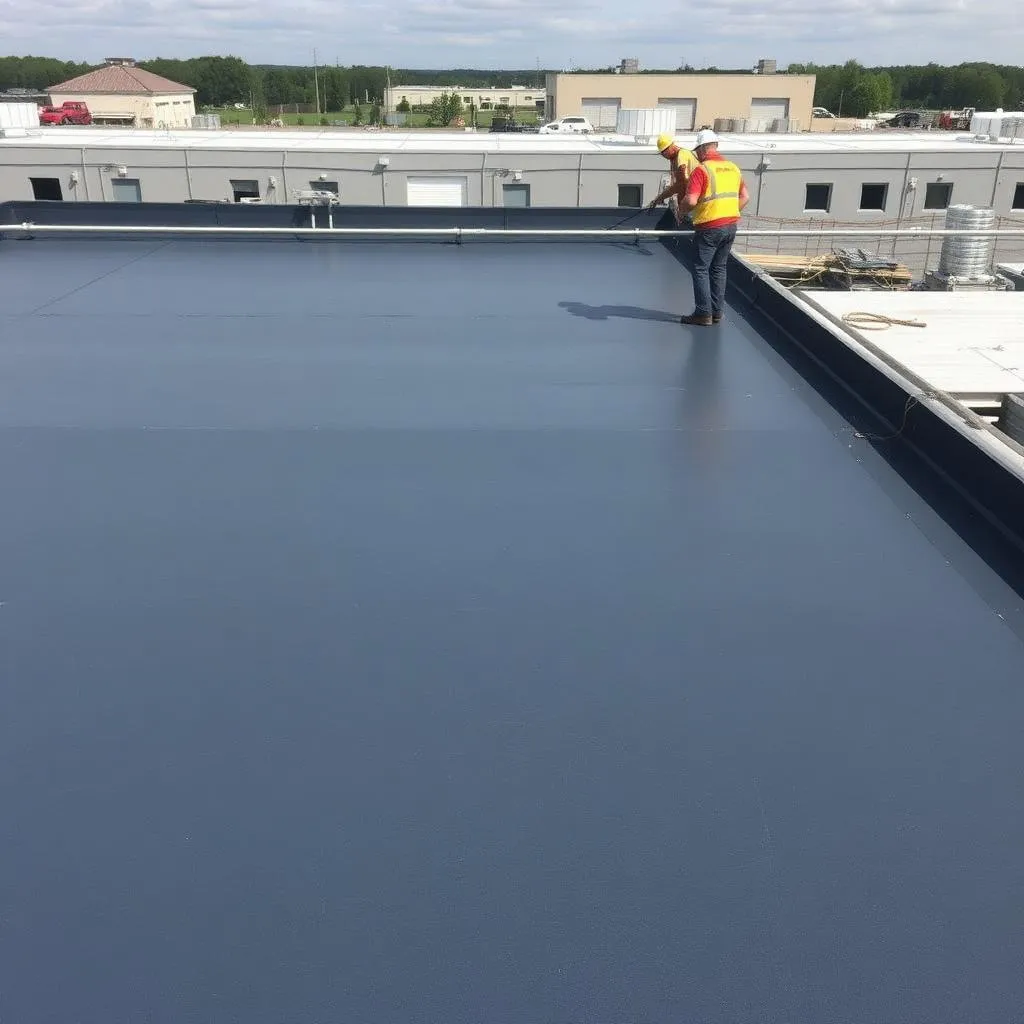
Nuon Energy installs commercial roofing across La Jolla and the surrounding coastal Southern California area. Our regional crews keep the same in-house team on your project from design through PTO, no subcontracted labor and no handoffs.
From small commercial properties to large industrial facilities, Nuon delivers roofing systems designed to handle heavy use, environmental exposure, and strict building requirements. Each project is carefully planned to minimize disruption to business operations while ensuring code-compliant, long-lasting results.
Warranties include NDL (No Dollar Limit) manufacturer coverage up to 30 years, with Nuon's own workmanship warranty on top.
Local context: The marine layer trims morning output and salt air is aggressive this close to the water, so we model shading and tilt carefully and spec anodized rails with stainless attachments. Coastal overlay review is normal here, not an exception.
Permits & incentives in La Jolla: City of San Diego uses SolarAPP+ for most stock residential PV, and coastal overlay or historic properties add a review cycle. The federal clean energy tax credit applies to solar and storage, and the San Diego Community Power battery rebate is the funded storage incentive right now since SGIP is out of money.
Commercial roofs fail quietly for years before anyone inside notices. By the time there is a bucket in the warehouse, the insulation is already wet.
Standing water means drainage has failed or the deck has deflected. Both accelerate membrane breakdown and add dead load the structure was not designed for.
Open seams are the most common failure point on single ply systems. They are also cheap to repair and expensive to ignore.
Saturated insulation loses R-value and never dries. A scan tells you whether you need a repair, an overlay, or a full tear-off.
Three service calls a year on the same roof usually costs more over five years than replacing the section that keeps failing.
Never put a twenty five year array on a membrane with eight years left. The removal and reset cost dwarfs the roofing savings.
A dark, aged membrane radiates heat into the building. A cool roof coating or a reflective TPO can measurably cut HVAC load in Southern California.
We will inspect, moisture-scan where needed, and give you a phased cost plan you can take to finance.
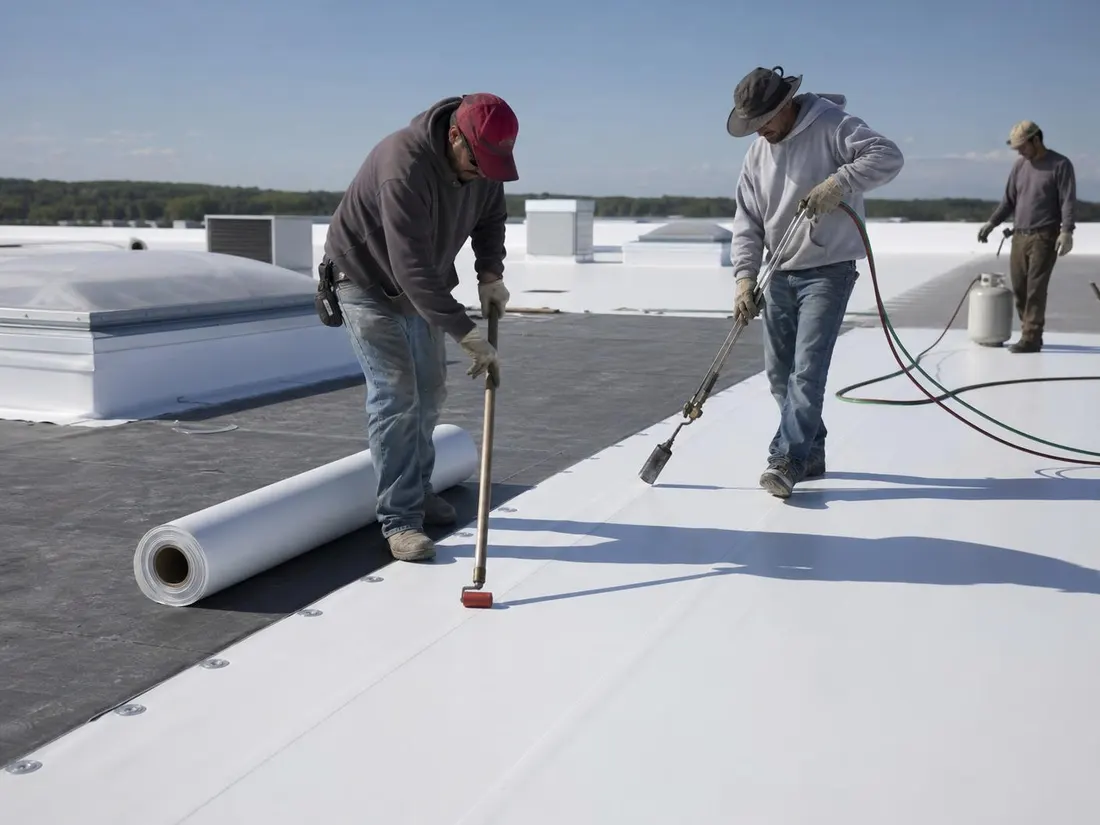
Commercial roofing demands specialized materials, precise installation, and a clear understanding of structural and operational needs. Nuon offers full-service commercial roofing, from inspections and repairs to complete replacements, planned to minimize disruption to daily operations.
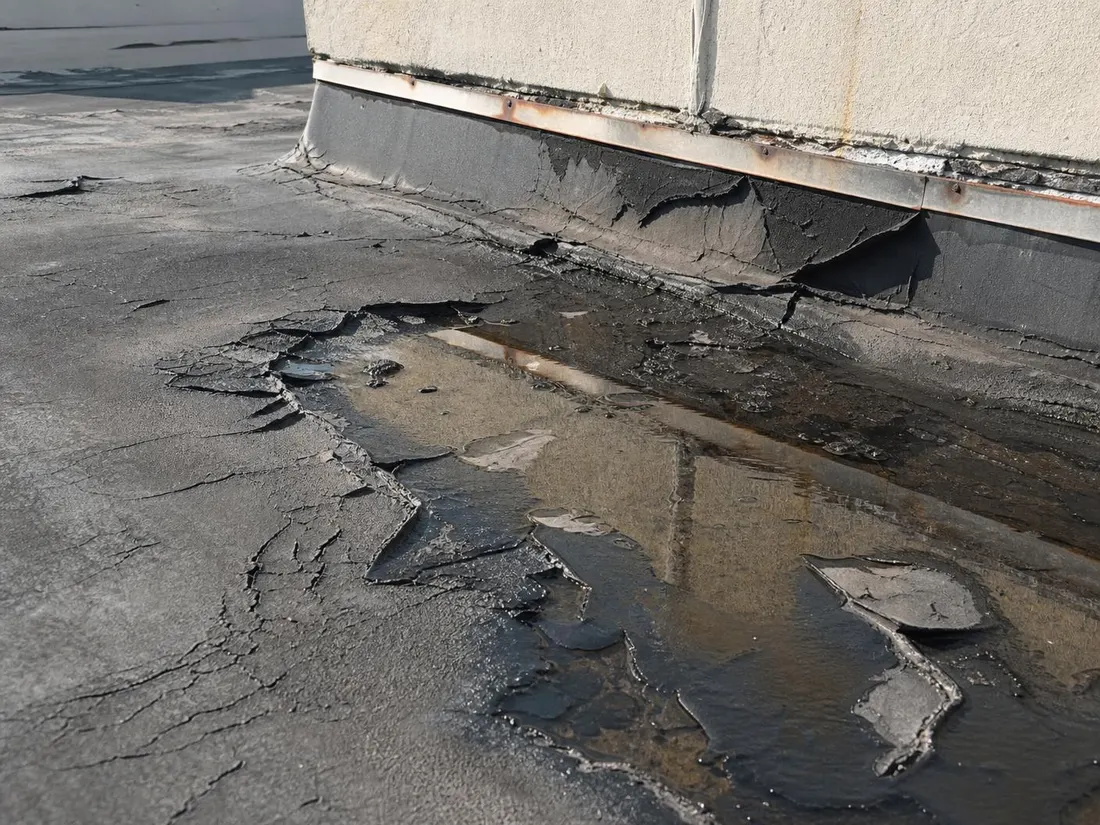
Commercial roofs face constant stress from sun exposure, temperature changes, foot traffic, and rooftop equipment. Over time these conditions cause serious problems if left unaddressed. Early identification prevents interior damage and costly structural repairs.
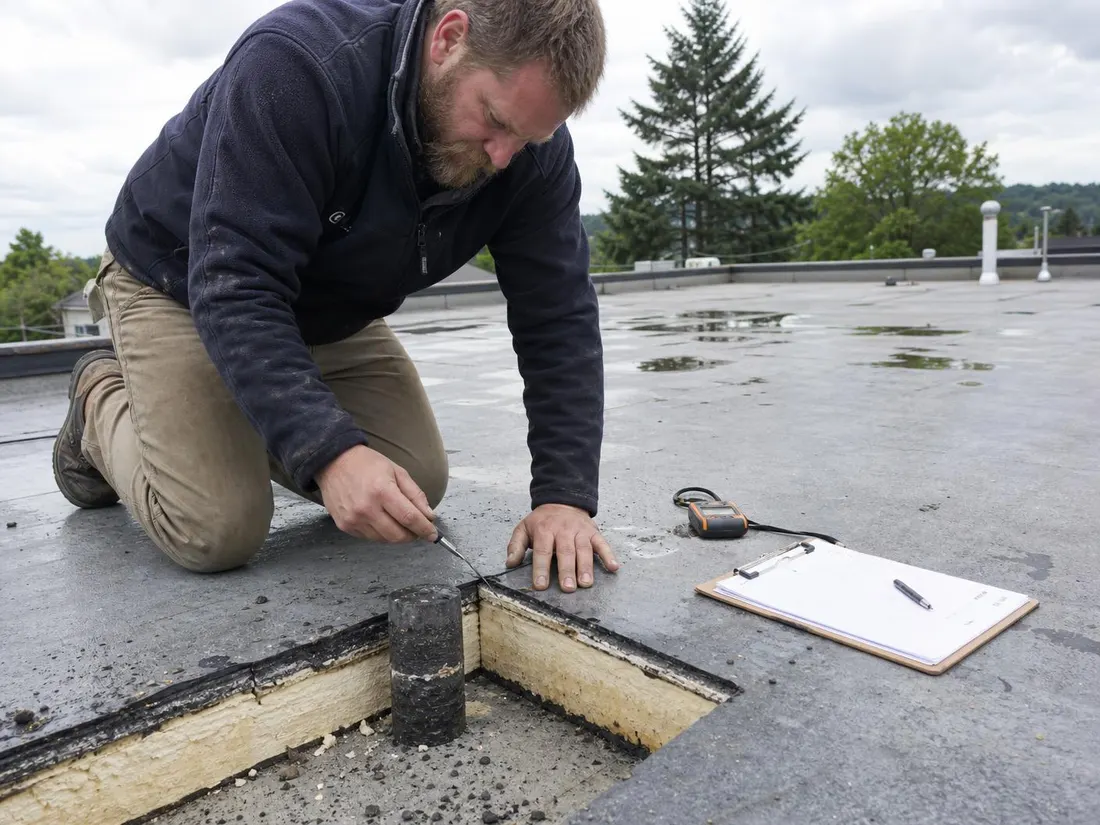
Not every roofing issue requires a full replacement. Nuon specializes in precise, cost-effective repairs that extend the life of existing systems when the structure is sound and materials are still within service life. When a roof reaches the end of its lifespan, we install modern systems designed to improve durability, energy efficiency, and Title 24 compliance.
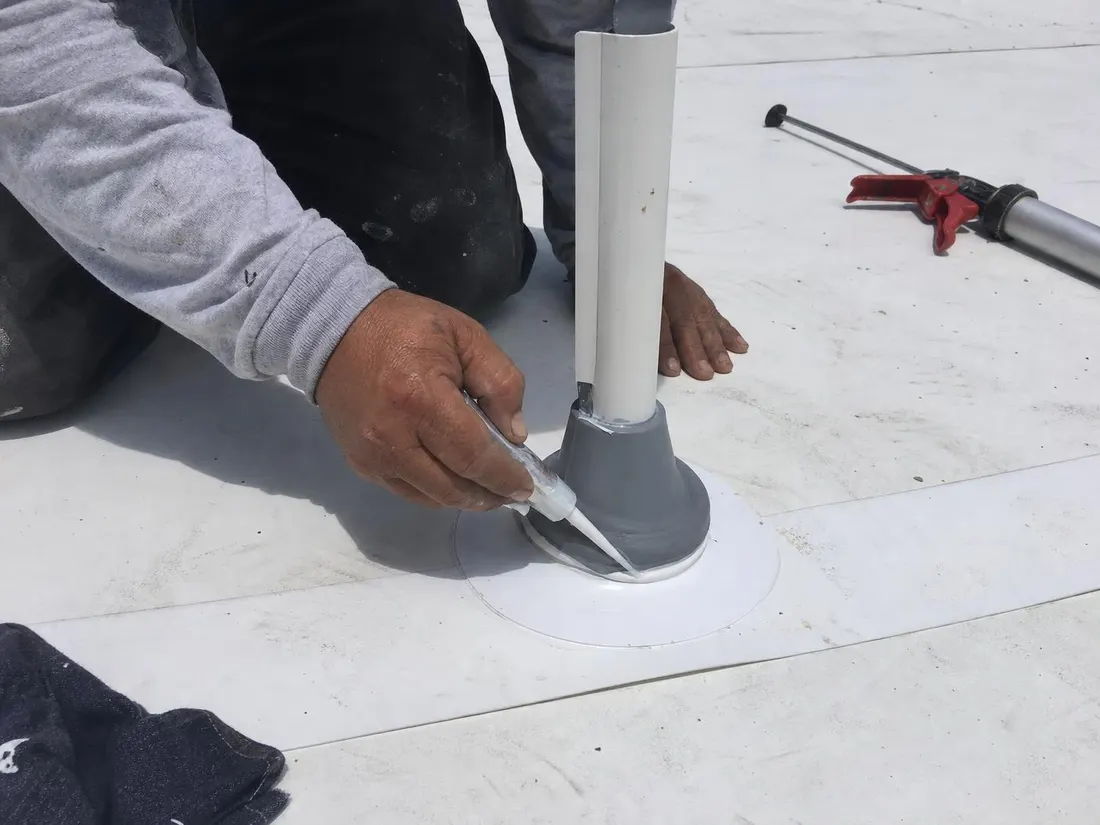
Nuon is committed to delivering dependable roofing services with transparency and professionalism. Our team prioritizes proper installation, clear communication, and long-term performance on every project.
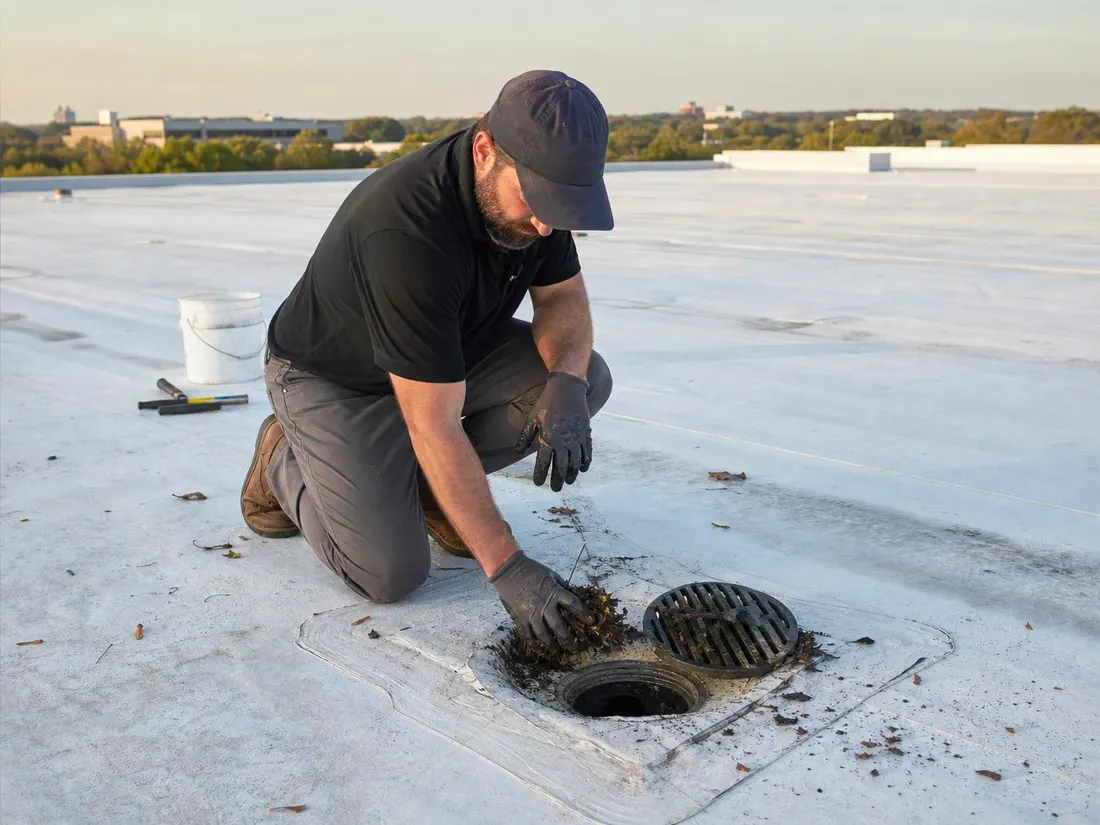
TPO is the workhorse for Southern California low-slope roofs. It is a reflective white membrane, it meets Title 24 cool roof requirements, it welds into a monolithic surface, and it costs less than PVC. For most warehouse, retail, and office buildings in Southern California it is the default recommendation.
PVC earns its premium where chemical exposure is a factor, restaurant exhaust, some manufacturing, or grease-laden air. It resists that exposure where TPO can degrade. If you have kitchen hoods on the roof, this is not a place to save money.
EPDM is a black membrane with excellent longevity but poor reflectivity, which makes it a hard fit under current energy code in this climate zone unless it is a coated or ballasted assembly.
A re-cover, adding a new membrane over the existing assembly with a cover board, is legitimate when the existing roof is dry, the deck is sound, and code allows a second layer. It saves tear-off cost and landfill. It is the wrong choice when there is trapped moisture, because you have just sealed the problem in for twenty years. A moisture scan tells us which situation you are in.
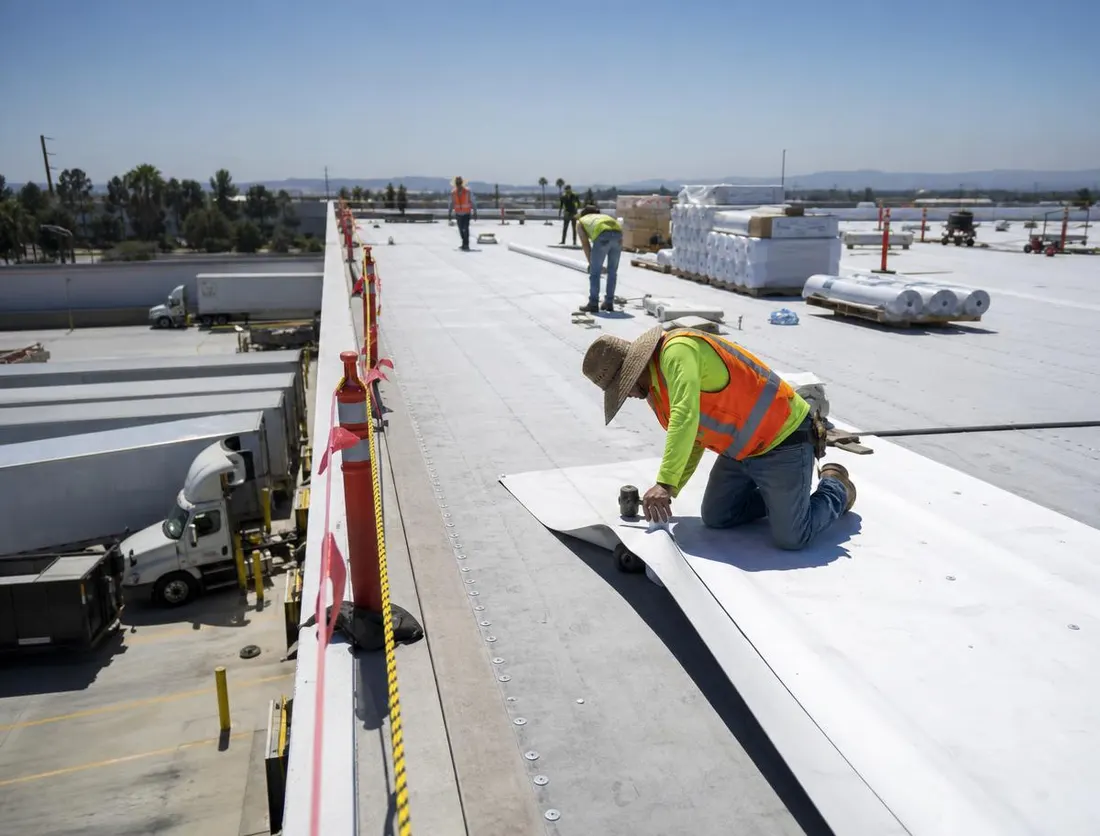
Nobody closes a distribution center for a roof. The job is planned around your operation, which means sequencing in zones, staging materials where forklifts are not running, and dry-in every single day so an unexpected rain event never reaches your inventory.
Crane and material lifts get scheduled outside receiving windows. Hot work, where used, follows a documented fire watch protocol. Debris comes down chutes into covered bins, not off the edge. Tenant notices go out before mobilization, not the morning of.
For occupied office buildings we typically run early starts so the noisiest phases happen before the floor fills. For tenant-heavy retail centers we phase by suite and coordinate with property management on parking and access.
You get a daily progress note with photos. It takes us five minutes and it stops the weekly what-is-happening-up-there phone call.
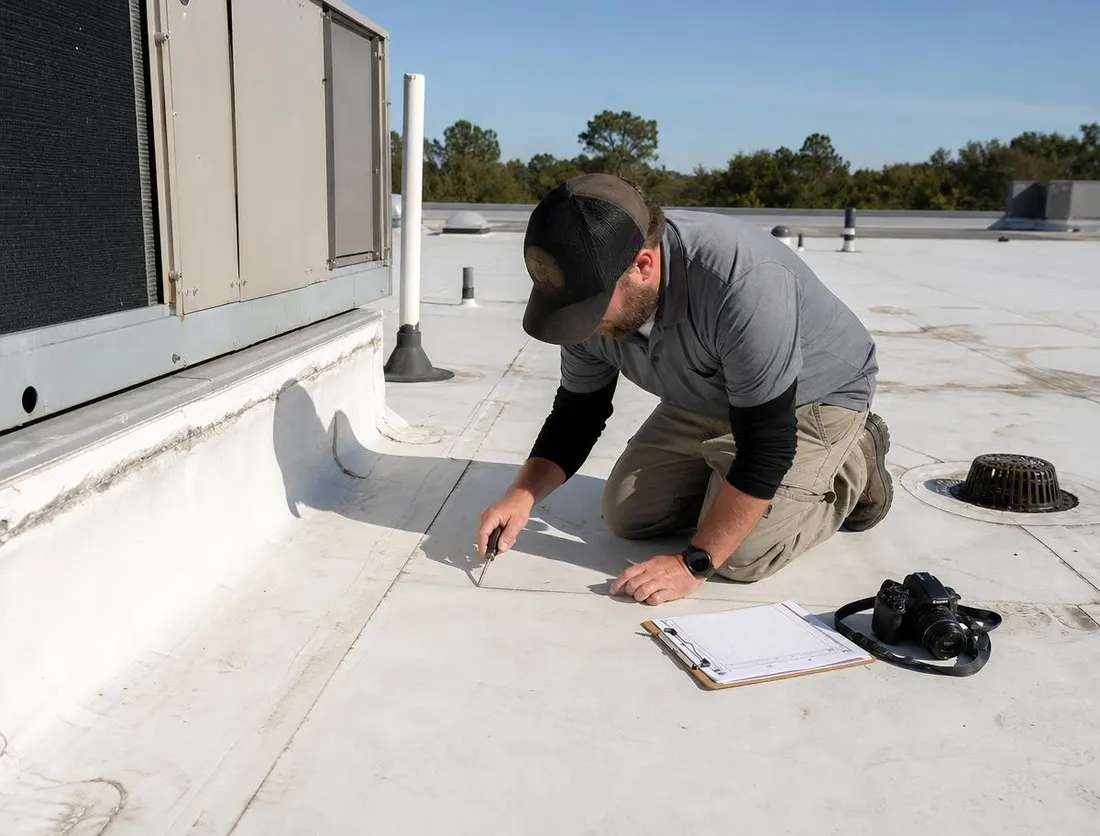
Commercial roofs almost never fail in the field of the membrane. They fail at penetrations, at terminations, at drains, and wherever another trade walked without telling anyone. An HVAC tech setting a condenser on a bare membrane, or a low-voltage installer running a strap through a seam, does more damage in an afternoon than a decade of sun.
A twice-yearly inspection program catches all of that while it is still a caulk-gun repair. Drains cleared before the first rain, seams probed, curbs and pitch pans checked, and a written condition report with photos going into your file.
Doing this is also what keeps an NDL manufacturer warranty enforceable. Most manufacturers require documented maintenance. Skipping it does not just risk leaks, it can void the coverage you paid for.
From assessment through warranty registration, delivered as one accountable contract.
Not included: structural steel repair, asbestos abatement, and mechanical unit relocation, quoted separately after the core sampling.
Next step
See this scope priced for your property
The building keeps operating. That constraint shapes every decision from staging to sequencing.
Week 1
Core samples, moisture survey, drainage review, and photographs of every detail and penetration.
Week 1 to 2
Repair, overlay, or full replacement, each priced, with expected remaining life on each path.
Week 2 to 3
Membrane type, thickness, insulation R-value, and which manufacturer NDL warranty term you want.
2 to 5 weeks
Permit, material staging, crane or hoist scheduling, and a written plan for tenant and traffic impact.
1 to 6 weeks
Sequenced in sections so no area is left open overnight. Daily tie-in and water-tightness checks.
Within 30 days of completion
The membrane manufacturer inspects and issues the no dollar limit warranty directly to you.
Step one starts with a site survey. Most homeowners are booked within a few days.
Next step
Book my site survey
Commercial roofs rarely fail all at once. The question is usually how much of it still has life.
Once a moisture scan shows saturated insulation, patching only moves the leak. The wet material has to come out.
A twenty five year array belongs on a roof with twenty five years left, not on one with six.
Widespread seam failure signals the membrane has reached the end of its service life, not a workmanship issue.
When interior damage claims are recurring, the replacement cost is usually less than the disruption.
Localized ponding is often a drainage or taper problem we can correct without touching the whole field.
If the scan is clean, a re-cover system can add fifteen or more years at a fraction of a tear-off.
A membrane under ten years old with good seams is worth maintaining on a service plan instead of replacing.
We can phase by roof section across budget cycles when a single-year replacement is not realistic.
Still weighing it up? We will walk your site and tell you which column you fall into.
Get a free quoteThe right specification depends on foot traffic, chemical exposure, slope, and whether solar is going on top.
| System | Typical service life | Best suited to |
|---|---|---|
| TPO single ply | 20 to 25 years | Most low slope buildings, highly reflective, solar friendly |
| PVC single ply | 25 to 30 years | Restaurants and plants with grease or chemical exposure |
| Modified bitumen | 20 years | High traffic roofs and complex detail work |
| Built-up roofing | 20 to 30 years | Heavy duty applications with significant mechanical traffic |
| Silicone restoration coating | 10 to 15 years | Extending a sound membrane without a capital tear-off |
Not sure which row fits your roof, panel or load profile? We will spec it for you, free.
Next step
Ask an installer
Cost per square foot varies more on commercial work than residential because the substrate conditions vary so much.
Large swing
Code allows a second layer in some cases, which removes disposal cost entirely
Significant
Title 24 minimums often require more insulation than what is currently up there
Adds cost, prevents failure
The only real fix for ponding on a dead flat deck
Meaningful on busy roofs
Every curb, drain, and pipe is hand-detailed labor
Site specific
Crane picks, night work, and occupied tenant spaces all add cost
10, 20, or 30 year NDL
Longer manufacturer warranties require heavier specifications
We give you the repair option even when replacement is more profitable for us. If the roof has seven good years left, you should get seven more years out of it.
Get your numberTPO is the workhorse for most Southern California warehouses and retail buildings. It reflects heat well, welds into a continuous surface, and works cleanly with solar attachments.
PVC is the better answer where grease, chemicals or restaurant exhaust are in play. Modified bitumen still earns its place on smaller roofs with complex detailing, and we install all three.
Almost every commercial roof we replace sits above a business that has to keep running. We phase the work by section, dry in each area before we leave for the day, and coordinate noise-sensitive stages around your operating hours.
Deliveries, crane placement and dumpster staging get planned with your facilities lead before day one, so parking and loading docks stay usable.
Next step
Get these answers for your own home
The most expensive mistake in commercial solar is putting an array on a roof that needs replacing in year six. We are on both sides of that decision.
If an array is coming, we set and flash the attachment points during installation. Retrofitting them later is where commercial roof leaks start.
You get the core sample photos and moisture data whether or not you hire us. That report is yours to shop with.
Sectional sequencing, night work where required, and a daily close-out that leaves the building watertight every evening.
Next step
Get a free quote
Still have a question we did not answer? Ask us directly, we will give you a straight answer and a written number.
A roof replacement is the natural moment to solve the energy side too.