
Evening usage dominates your bill
Storage is fundamentally a time-shift device. If your consumption is already mostly midday, the savings case is weaker and honesty is cheaper than regret.
Electricity rates in Southern California are among the highest in the country, and they continue to rise. With Time-of-Use pricing, NEM 3.0, and frequent grid strain, solar batteries are no longer a luxury; they're a smart energy strategy. In Coronado (92118), Nuon crews design every install around NEM 3.0 rates, 266 usable sun days a year, and the specific roof and load profiles we see across Village, Coronado Cays, The Country Club, Coronado Shores.
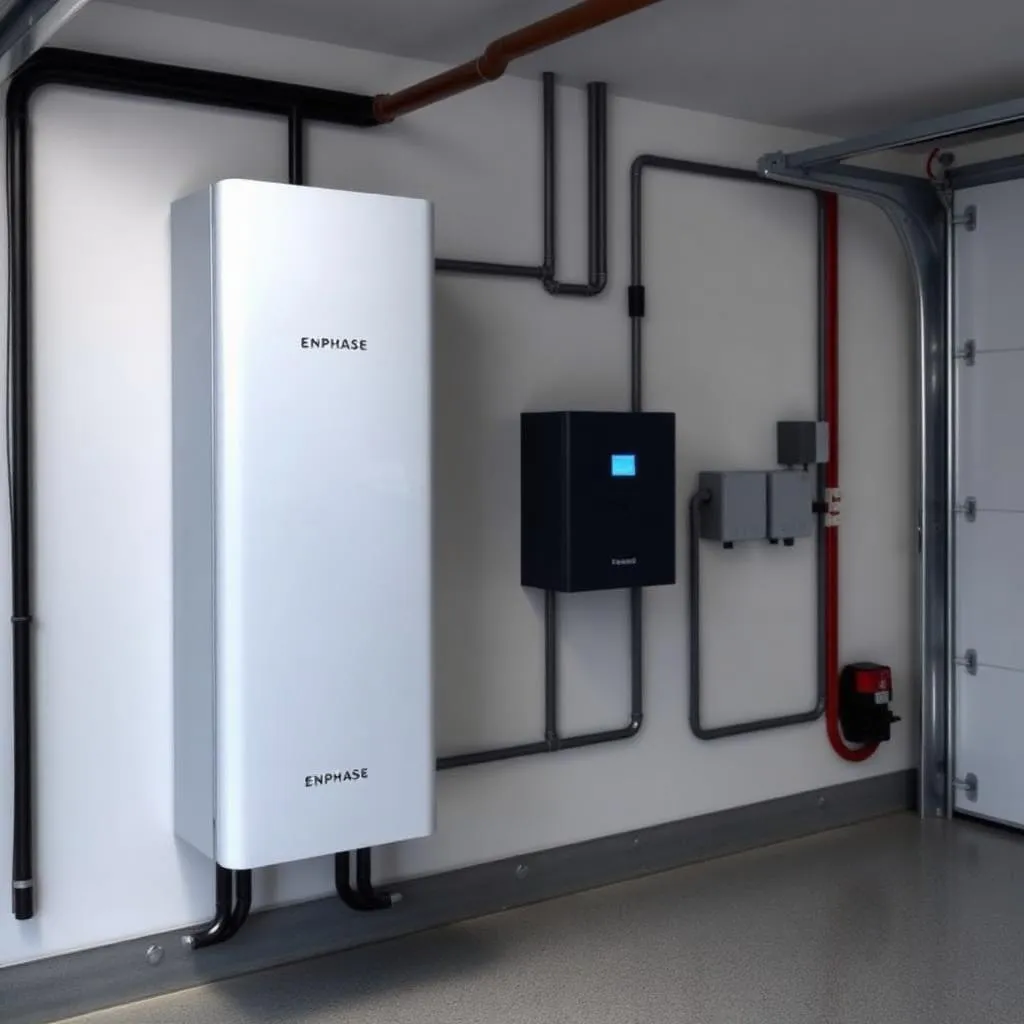
Nuon Energy installs battery storage across Coronado and the surrounding coastal Southern California area. Our regional crews keep the same in-house team on your project from design through PTO, no subcontracted labor and no handoffs.
Nuon Energy designs and installs solar battery systems specifically for homes served by your utility, including Southern California Edison, San Diego Gas & Electric, Pacific Gas & Electric, Los Angeles Department of Water and Power, and Riverside-area utilities. We size against your actual rate plan and usage curve, not a template.
Batteries are commissioned with grid-forming inverters, storm-mode logic, and mobile monitoring so you always see what's flowing in, out, and stored.
Local context: Sea-air corrosion is the harshest in the county; every Coronado install gets marine-grade stainless attachments, anodized rails, and a service inspection every year rather than the typical two-year cycle.
Permits & incentives in Coronado: City of Coronado has a mandatory design-review process for any roof-visible install; expect 4-6 weeks including HRB signoff. The federal clean energy tax credit, the San Diego Community Power battery rebate for storage, and Coronado's historic-district projects may qualify for federal tax credits when solar is integrated into a historically-appropriate reroof.
A battery solves specific problems. If none of these describe your house, we will tell you to wait.
Storage is fundamentally a time-shift device. If your consumption is already mostly midday, the savings case is weaker and honesty is cheaper than regret.
Every exported kilowatt-hour is sold low and bought back high. Capturing it in a battery is the single largest lever available.
High fire threat district shutoffs and older feeders in the back country make backup a practical requirement, not a luxury.
Storage can absorb an EV charger or a heat pump without triggering a full service upgrade in some configurations.
Retrofitting storage onto a healthy array is cheaper than a full new system and often the fastest payback available to you.
SGIP is out of funding, but the San Diego Community Power battery rebate can still change the math for homes in that territory.
Share a bill and we will compare platforms against your actual usage curve.
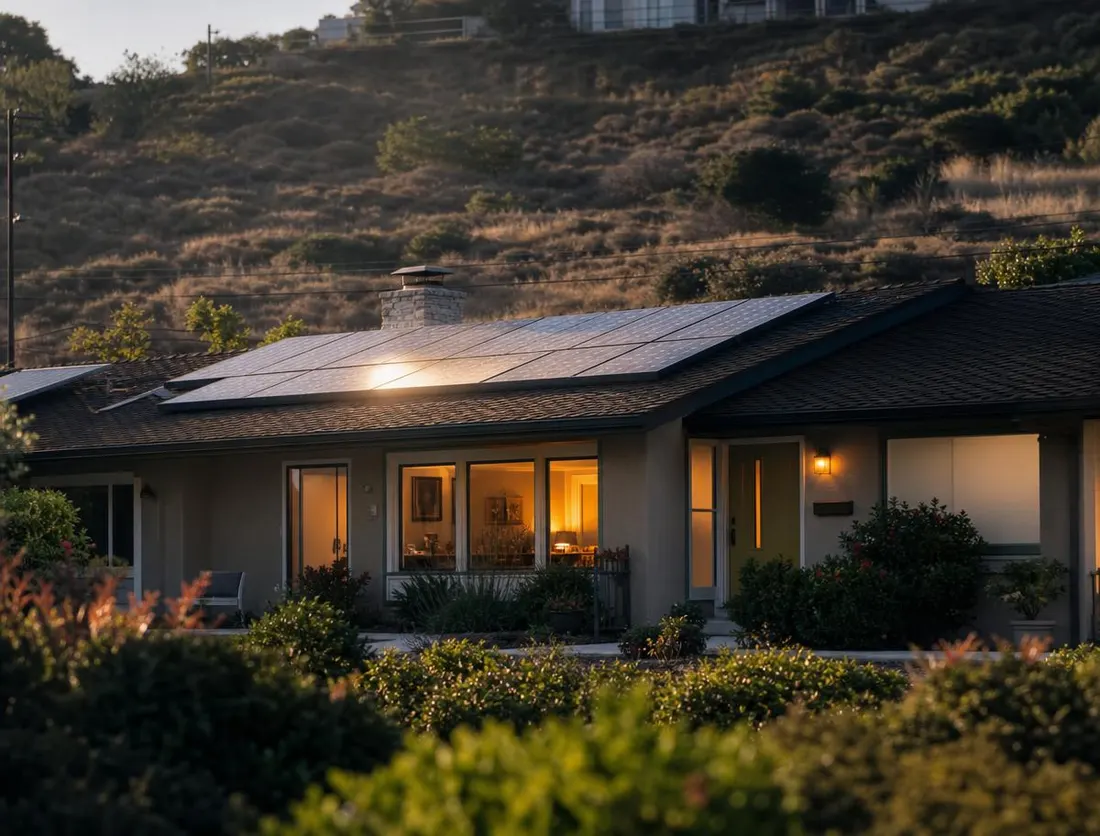
Under NEM 3.0, the credit for exported solar is a fraction of the retail rate. Storage is how you keep the value of what your panels produce, charge from solar during the day, discharge during peak evening hours or during outages.
We work with every major SoCal utility and every leading battery platform, so the recommendation you get is based on your rate plan and roof, not on what we happen to stock.
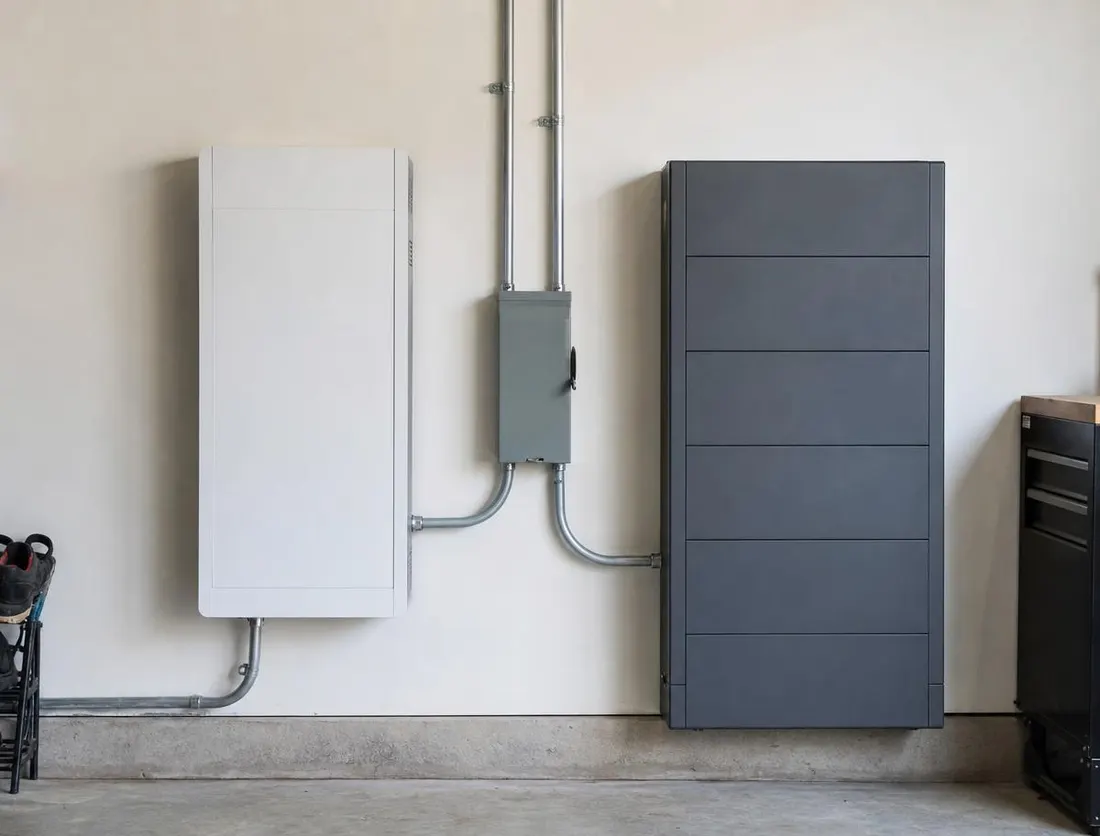
There is no single best battery, there is a best battery for your existing equipment, your utility, and how you plan to use it. If your solar is already Enphase, an IQ battery drops into the same monitoring and the same installer ecosystem. If you want the most refined app experience and the largest installed base in Southern California, Powerwall is hard to argue with. If your inverter is SolarEdge, their storage integrates tighter than an AC-coupled alternative.
Capacity is the obvious spec and the least useful one on its own. Continuous power output determines whether the battery can actually start your air conditioner. A 13.5 kWh battery that can only push 5 kW continuous will run your lights all night and stall the moment the condenser calls for cooling.
Round-trip efficiency, warranty throughput, and how the unit behaves at 100 degrees in a Poway garage all matter more than a spec sheet headline. We shortlist two platforms per home and show you the tradeoff instead of presenting one option as the only option.

California's Self-Generation Incentive Program is currently unfunded, so we do not build SGIP money into a proposal. We still check the program status and document eligibility in case funding reopens.
The San Diego Community Power battery rebate is the live local storage incentive we check first for eligible customers. Outside that territory, we review current utility and state programs by service address rather than promising a statewide rebate.
The federal residential clean energy credit applies to storage paired with solar and, under current rules, to standalone storage as well. It is a credit against tax owed, not a rebate check, so the value depends on your tax situation. We will tell you what the credit is worth on paper and recommend you confirm it with your own preparer rather than pretending to be your accountant.
SGIP, the state storage rebate people ask about most, is currently unfunded, so we do not build it into a proposal. The San Diego Community Power battery rebate is the live local storage incentive, and we file and track that one for you.
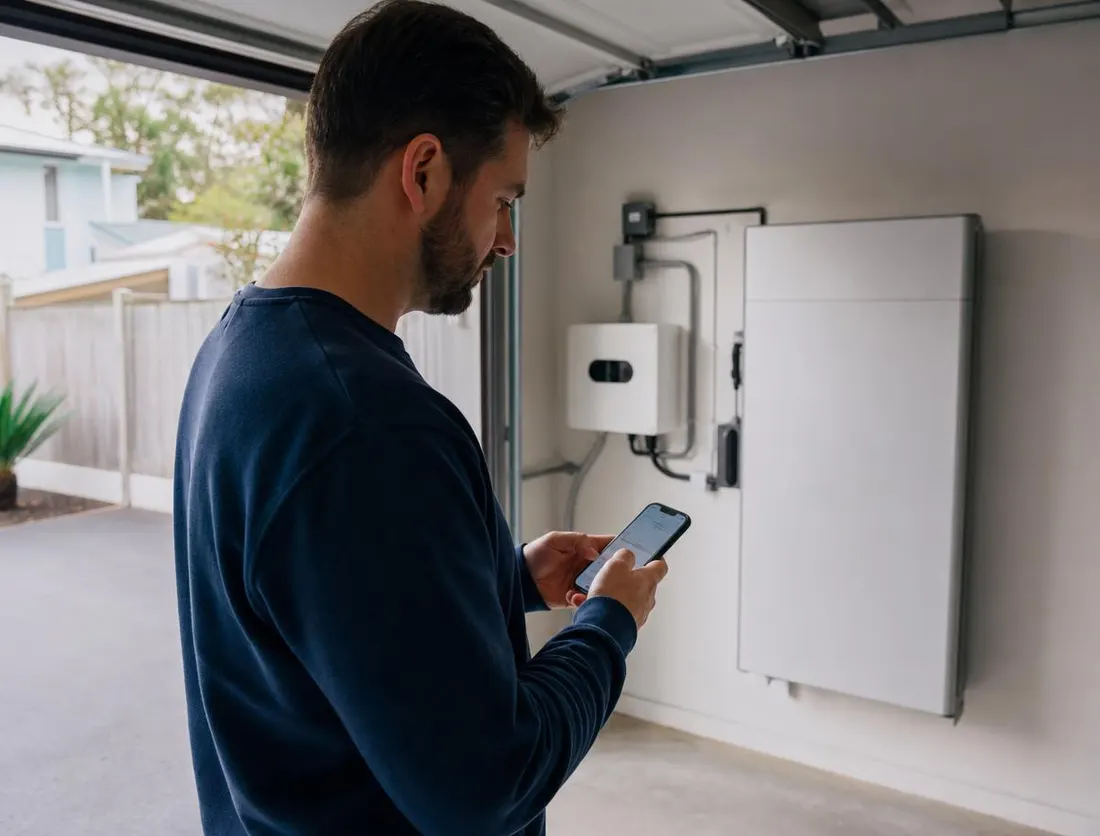
For most of the year you will not think about it. The system runs its schedule, fills on solar, discharges through the peak window, and you notice it as a smaller bill. The app is there when you are curious, and most homeowners check it obsessively for a month and then stop.
Outages are the moment it earns its keep. A properly configured system transitions fast enough that clocks do not reset. What you will notice is that the neighbors go dark and you do not, and then a decision about whether to run the air conditioning or ride it out on essentials.
Batteries degrade, slowly. Expect meaningful usable capacity at year ten, with warranty terms that guarantee a percentage of original capacity through the term. Cycling one full charge a day is normal and is what these units are designed and warrantied for.
Maintenance is minimal. Keep the clearances clear, keep the vents free of spider webs and dust, and let us look at it during the annual system check. There is nothing to service on a routine schedule.
Whether you choose Tesla, Enphase, or FranklinWH, the scope of work is the same.
Not included: generator integration, detached structure trenching, and remediation of aluminum branch wiring in older homes.
Next step
See this scope priced for your property
Retrofit projects on existing solar move faster than new builds because the array and interconnection already exist.
Days 1 to 3
We analyze your hourly usage and model how many kilowatt-hours a battery would actually displace at peak rates.
Week 1
AC coupled or DC coupled, modular or single unit. We show you the trade-offs instead of leading with whatever we stock.
Week 1 to 2
Wall space, thermal environment, panel capacity, and conduit route confirmed in person.
3 to 6 weeks
City electrical permit and the utility storage application filed together.
1 to 2 days
Mount, wire, energize, program the rate schedule, and run a live outage test.
1 to 3 weeks
Final sign-off, then permission to operate. Backup functions work before PTO, export functions do not.
Step one starts with a site survey. Most homeowners are booked within a few days.
Next step
Book my site survey
Batteries solve two specific problems very well. It helps to know which one you are buying.
Charge cheap or from solar, discharge during the 4pm to 9pm window when the utility charges the most.
Backup kicks in fast enough that most homeowners only notice because the neighbors went dark.
Keeping your own production instead of exporting it at wholesale is where the payback now lives.
An EV, a heat pump or an ADU is much easier to absorb when you have storage between you and the meter.
Storage runs off stored energy. Without solar recharging it, a multi-day outage will eventually drain the system.
If your main service panel is maxed out, that gets corrected first. We will scope it honestly.
A battery on a flat rate plan with no solar saves very little. The rate plan has to have a spread to work with.
Air conditioning plus an EV charger plus everything else usually needs more than one unit. We size for reality, not for the brochure.
Still weighing it up? We will walk your site and tell you which column you fall into.
Get a free quoteWe are not a single-brand shop. Each of these wins in different houses, and the differences are real.
| System | Usable capacity | Strongest fit |
|---|---|---|
| Tesla Powerwall 3 | 13.5 kWh, 11.5 kW output | New solar plus storage, highest continuous output per unit |
| Enphase IQ Battery 5P | 5 kWh modules | Fine-grained sizing and homes already running Enphase microinverters |
| FranklinWH aPower | 13.6 kWh | Whole-home backup with generator integration on rural parcels |
| SolarEdge Home Battery | 9.7 kWh | Existing SolarEdge inverter owners wanting DC coupled efficiency |
| Multi-unit stacks | 27 to 54 kWh | All-electric homes, well pumps, or genuine multi-day outage resilience |
Not sure which row fits your roof, panel or load profile? We will spec it for you, free.
Next step
Ask an installer
Capacity is the headline. These are the things that decide the real number.
Primary driver
Buy for your evening load, not for the largest number available
$1,200 to $2,800 difference
A critical load subpanel is far cheaper than backing up the entire service
Varies
DC coupling is more efficient on new builds, AC coupling is simpler for retrofits
$2,500 to $5,500
Required when the existing busbar cannot carry the added source
Reduces net cost
Standalone storage qualifies. Verify with your tax preparer
Case by case
SGIP is unfunded today, so we model only rebates that are actually open
We include the electrical work in the original number. Panel upgrades discovered after signing are the most common source of solar-industry surprise invoices.
Get your numberCalifornia's Self-Generation Incentive Program is currently unfunded, so we do not build SGIP money into a proposal. We still check the program status and document eligibility in case funding reopens.
The San Diego Community Power battery rebate is the live local storage incentive we check first for eligible customers. Outside that territory, we verify current programs by address and utility before you count on any rebate.
We install Tesla, Enphase, SolarEdge and Duracell systems. The right one usually comes down to what inverter you already own, how much backup you want, and whether you prefer one large unit or modular capacity you can expand later.
Because we are not tied to a single manufacturer, the recommendation follows your rate plan and your roof rather than whatever is sitting in a warehouse.
Next step
Get these answers for your own home
A company that installs one battery will always conclude that battery is right for your house. We carry several so the recommendation can follow the data.
Twelve months of hourly meter data tells us exactly how many kilowatt-hours pass through the peak window. That number sets the capacity, nothing else does.
You approve the circuit list before the permit is filed, so nobody is surprised about what runs during an outage.
Factory settings do not know your tariff. We set reserve levels and charge windows against your actual rate plan and revisit them after the first bill.
Next step
Get a free quote
The best battery for your home depends on your utility, existing solar equipment, backup goals, and budget. Here are the platforms we install and support directly.
Best-selling battery in Southern California
Ideal for Southern California utility customers offsetting evening TOU rates
Modular, expandable, ultra-reliable
Ideal for Homes on Enphase microinverter solar systems
Optimized for SolarEdge inverter systems
Ideal for Homes with existing SolarEdge solar
All-in-one battery + inverter reliability
Ideal for Homeowners focused on durability and warranty
Still have a question we did not answer? Ask us directly, we will give you a straight answer and a written number.
Storage is one part of a system. These are the pieces around it.